Disability Awareness Month Tip for Thurs., Oct. 8: World Sight Day

Screen Shot 2015-10-07 at 3.41.26 PM
In honor of Disability Employment Awareness Month, the Office of Special Services (OSS) is working to raise awareness of disabilities by offering daily facts and tips about people with disabilities and living with disability. Please take a minute to read and broaden your understanding.

Today’s topic is: October 8, 2015 is World Sight Day. This year’s call to action:

World Sight Day is an important advocacy and communications opportunity for the eye health community. It is a great time to engage with a wider audience – a patient’s family, those who seldom get an eye exam, diabetics – and showcase why eye health needs everybody’s attention.

Eye care for all: This year, The International Agency for the Prevention of Blindness (IAPB) urges you to focus on everybody who needs eye care services – everybody. Think of all the groups of people who need eye care – especially the most vulnerable or the ones most in need. What can we do to bring eye care to them all? How can we ensure that access to eye care is not limited by gender or geographic location, or even financial status? Do remember, ‘Eye Health’ also includes rehabilitation and assistive services for those with irreversible vision loss.

This World Sight Day, let’s do something that will draw attention to the great unmet need in eye care services.

On World Sight Day, IAPB members work together to:

1. Raise public awareness of blindness & vision impairment as major international public health issues
2. Influence Governments/Ministers of Health to participate in and designate funds for national blindness prevention programs
3. Educate target audiences about blindness prevention,  about VISION 2020 and to generate support for VISION 2020 program activities

International Key Messages:

1. Approximately 285 million people worldwide live with low vision and blindness
2. Of these, 39 million people are blind and 246 million have moderate or severe visual impairment
3. 90% of blind people live in low-income countries
4. Yet 80% of visual impairment is avoidable – i.e. readily treatable and/or preventable
5. Restorations of sight, and blindness prevention strategies are among the most cost-effective interventions in health care
6. The number of people blind from infectious causes has greatly reduced in the past 20 years
7. An estimated 19 million children are visually impaired
8. About 65 % of all people who are visually impaired are aged 50 and older, while this age group comprises only 20% of the world’s population
9. Increasing elderly populations in many countries mean that more people will be at risk of age-related visual impairment.

The above information was taken from the website of the IAPB. For more information about World Sight Day, click here.
Music Faculty Open House and Showcase Fri., Oct. 9

music faculty
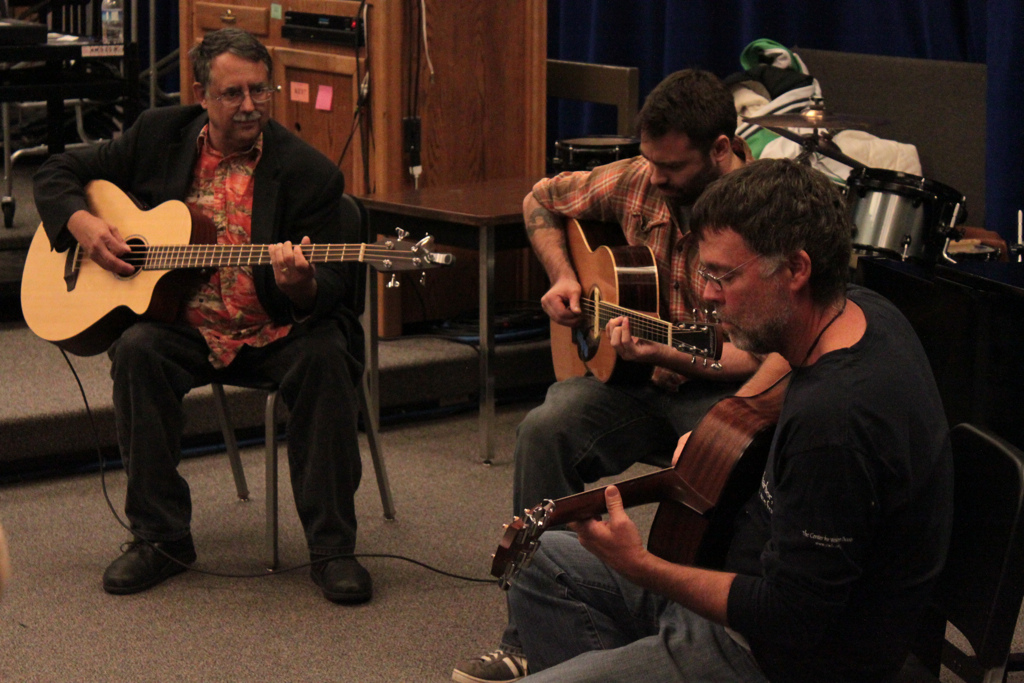
On Fri., Oct. 9 the Shoreline Community College music faculty present their annual Faculty Showcase performances at 9:30 and 10:30 a.m. in room 818. Music and Music Tech faculty will play a light-hearted concert for students and other faculty members. A wildly diverse array of musical styles will be presented along with brief introductions as a kick-off to the new school year.

This has proven to be one of the more memorable events of the year in the past and the music department would love to see you in attendance!

Pass the Word to Students About the Fall University Transfer Fair Thurs., Oct. 8

transfer fair
Be sure to tell your students about the Fall University Transfer Fair happening Thurs., Oct. 8. It’s their chance to get face time with representatives from 20+ area colleges and universities and get answers to all their questions about transferring.

The Fall University Transfer Fair is Thurs., Oct. 8 in the PUB Main Dining room, 9215 between 10 a.m. and 1 p.m.  Students can meet with reps from schools including but not limited to:

Bastyr University
Central Washington University
City University of Seattle
Cornish College of the Arts
Eastern Washington University
Eastern at Bellevue College
Fashion Institute of Design and Merchandising
Grand Canyon University
Johnson & Wales University
Lake Washington Institute of Technology
North Seattle College
Northwest University
Oregon State University
Seattle University
The Evergreen State College
University of Washington
University of Washington-Bothell
University of Washington-Tacoma
Western Governors University Washington
Washington State University-Vancouver
Western Washington University
and More . . . .

Join Us For Campus Photo in Support of Umpqua Community College, Wed., Oct. 7

Screen Shot 2015-10-06 at 10.41.33 PM
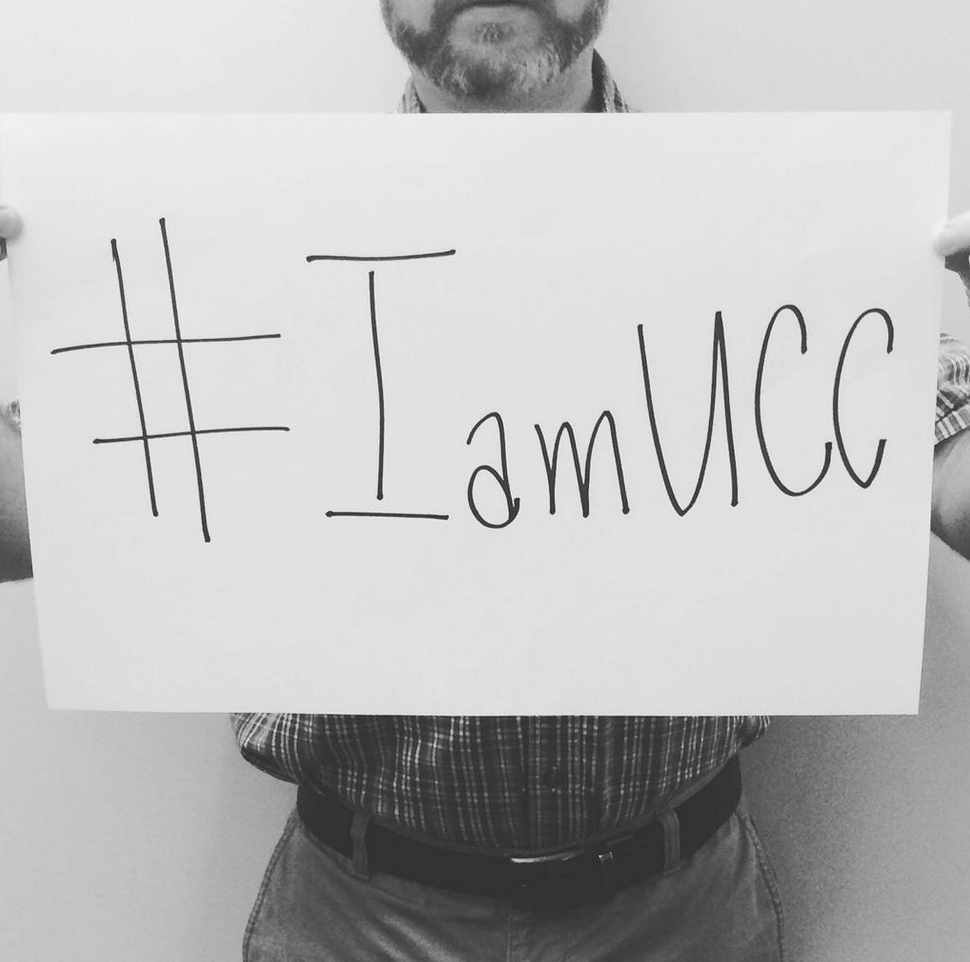
Please join us in the PUB courtyard (inside the main lobby of the PUB if it’s raining) at 12:30 p.m. on Wed., Oct. 7 for a campus community photo to show our love and support for the students, faculty and staff at Umpqua Community College. A social media campaign using the hashtag #IamUCC was started by the president of Portland Community College, and features photos of campus communities across the nation standing in solidarity with Umpqua – we’d like your help in adding Shoreline’s voice to that show of support. The SLC will have banners and posters made in advance for participants to display for the photo, so no need to bring anything but yourself, your colleagues and your students.

Shoreline’s Disability Awareness Society Honors International Cerebral Palsy Day Wed., Oct. 7

wcpday
October 7, 2015 is World Cerebral Palsy Day. In honor of this day, the students in Shoreline’s Disability Awareness Society will be hosting a table in the PUB from 11:30 a.m. – 1:30 p.m. to help educate the campus community on cerebral palsy…a disability that affects 17 million people world-wide.

Although cerebral palsy (CP) is the most common physical disability in childhood, it is widely misunderstood. Through World CP Day, we have the opportunity to raise awareness of CP in our communities and assist others to look beyond the disability.

Public awareness is an issue because CP is a complex, lifelong disability. It primarily affects movement, but people with CP may also have visual, learning, hearing, speech, epilepsy and intellectual impairments. It can be mild, such as a weakness in one hand, to severe cases in which people have little control over movements or speech and may need 24-hour assistance.

People living with CP can experience a range of responses from others in their communities. On one end of the spectrum, they can face deep-seated but misguided sympathy, or even pity. Though intentions are good, they infantilize the person with CP. They can be smothered with (too much) love, and spoken to in a simple, childlike way. Others can subconsciously over-protect a person with CP, and thus prevent them from having essential life experiences.

On the other end of the spectrum, CP is viewed through deep-seated cultural beliefs. It may be seen as validation of superstitions about the mother, or wrath upon a family. Some even believe that CP is contagious or that a child with CP brings shame to a family. Mothers may be abandoned with their child, or a person with CP may live their life in an institution.

And in the middle are thousands of fine people who still find it difficult to make eye contact or know how to communicate with someone who has CP. It is not that they feel any ill will, it is just best—maybe even polite—to not engage.

There is nothing to be gained in blaming people for their ignorance about CP. Instead, we will work to put an end to it. We have the ability and the moral obligation to ensure everyone knows the real truth, and acts accordingly.

The above information and more can be found on the World CP Day’s site. For an graphic with even more information about cerebral palsy, click here.