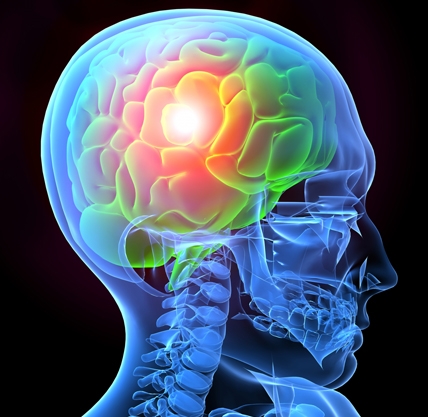
Disability Awareness Month Tip for Oct. 30: Facts About Traumatic Brain Injury

brain
In honor of Disability Employment Awareness Month, the Office of Special Services (OSS) is working to raise awareness of disabilities by offering daily facts and tips about people with disabilities and living with disability. Please take a minute to read and broaden your understanding.

Traumatic Brain Injury (TBI) Definition
Traumatic brain injury occurs when an external mechanical force causes brain dysfunction.
Traumatic brain injury usually results from a violent blow or jolt to the head or body. An object penetrating the skull, such as a bullet or shattered piece of skull, also can cause traumatic brain injury.

Mild traumatic brain injury may cause temporary dysfunction of brain cells. More serious traumatic brain injury can result in bruising, torn tissues, bleeding and other physical damage to the brain that can result in long-term complications or death.

Symptoms
Traumatic brain injury can have wide-ranging physical and psychological effects. Some signs or symptoms may appear immediately after the traumatic event, while others may appear days or weeks later.

Mild traumatic brain injury
The signs and symptoms of mild traumatic brain injury may include:

Physical symptoms

  • Loss of consciousness for a few seconds to a few minutes
  • No loss of consciousness, but a state of being dazed, confused or disoriented
  • Headache
  • Nausea or vomiting
  • Fatigue or drowsiness
  • Difficulty sleeping
  • Sleeping more than usual
  • Dizziness or loss of balance

 Sensory symptoms

  • Sensory problems, such as blurred vision, ringing in the ears, a bad taste in the mouth or changes in the ability to smell
  • Sensitivity to light or sound

 Cognitive or mental symptoms

  • Memory or concentration problems
  • Mood changes or mood swings
  • Feeling depressed or anxious

Moderate to severe traumatic brain injuries
Moderate to severe traumatic brain injuries can include any of the signs and symptoms of mild injury, as well as the following symptoms that may appear within the first hours to days after a head injury:

Physical symptoms

  • Loss of consciousness from several minutes to hours
  • Persistent headache or headache that worsens
  • Repeated vomiting or nausea
  • Convulsions or seizures
  • Dilation of one or both pupils of the eyes
  • Clear fluids draining from the nose or ears
  • Inability to awaken from sleep
  • Weakness or numbness in fingers and toes
  • Loss of coordination

 Cognitive or mental symptoms

  • Profound confusion
  • Agitation, combativeness or other unusual behavior
  • Slurred speech
  • Coma and other disorders of consciousness

When to see a doctor
Always see your doctor if you or your child has received a blow to the head or body that concerns you or causes behavioral changes. Seek emergency medical care if there are any signs or symptoms of traumatic brain injury following a recent blow or other traumatic injury to the head.

The terms “mild,” “moderate” and “severe” are used to describe the effect of the injury on brain function. A mild injury to the brain is still a serious injury that requires prompt attention and an accurate diagnosis.

Causes
Traumatic brain injury is caused by a blow or other traumatic injury to the head or body. The degree of damage can depend on several factors, including the nature of the event and the force of impact.

Injury may include one or more of the following factors:

  • Damage to brain cells may be limited to the area directly below the point of impact on the skull.
  • A severe blow or jolt can cause multiple points of damage because the brain may move back and forth in the skull.
  • A severe rotational or spinning jolt can cause the tearing of cellular structures.
  • A blast, as from an explosive device, can cause widespread damage.
  • An object penetrating the skull can cause severe, irreparable damage to brain cells, blood vessels and protective tissues around the brain.
  • Bleeding in or around the brain, swelling, and blood clots can disrupt the oxygen supply to the brain and cause wider damage.

Common events causing traumatic brain injury include the following:

  • Falling out of bed, slipping in the bath, falling down steps, falling from ladders and related falls are the most common cause of traumatic brain injury overall, particularly in older adults and young children.
  • Vehicle-related collisions. Collisions involving cars, motorcycles or bicycles — and pedestrians involved in such accidents — are a common cause of traumatic brain injury.
  • About 20 percent of traumatic brain injuries are caused by violence, such as gunshot wounds, domestic violence or child abuse. Shaken baby syndrome is traumatic brain injury caused by the violent shaking of an infant that damages brain cells.
  • Sports injuries. Traumatic brain injuries may be caused by injuries from a number of sports, including soccer, boxing, football, baseball, lacrosse, skateboarding, hockey, and other high-impact or extreme sports, particularly in youth.

Explosive blasts and other combat injuries. Explosive blasts are a common cause of traumatic brain injury in active-duty military personnel. Although the mechanism of damage isn’t yet well-understood, many researchers believe that the pressure wave passing through the brain significantly disrupts brain function.
Traumatic brain injury also results from penetrating wounds, severe blows to the head with shrapnel or debris, and falls or bodily collisions with objects following a blast.

The people most at risk of traumatic brain injury include:

  • Children, especially newborns to 4-year-olds
  • Young adults, especially those between ages 15 and 24
    Adults age 75 and older

The above information is taken from the following sources:

http://www.mayoclinic.org/diseases-conditions/traumatic-brain-injury/basics/symptoms/con-20029302

http://www.mayoclinic.org/diseases-conditions/traumatic-brain injury/basics/symptoms/con-20029302

http://www.mayoclinic.org/diseases-conditions/traumatic-brain-injury/basics/causes/con-20029302

http://www.mayoclinic.org/diseases-conditions/traumatic-brain-injury/basics/risk-factors/con-20029302

Support Our Phins! Men’s Basketball Exhibition HOME Game Fri., Oct. 30

Men's basketball Peninsula @ Shoreline CC
Head to the Aquarium (main gym, 3000 bldg.) this Fri., Oct. 30 from 2-4 p.m. to cheer on our Men’s Basketball team as they take on Douglas College in an exhibition game in their first match up of this season. #GoPhins! #PhinNation #PhinsUpAllIn

Catch Jim Elenteny and The Insinuators Debut Performance This Sun., Nov. 1

jim elentenyThis Sunday marks the end of daylight savings – use your extra hour to check out the debut performance of Music Technology faculty member Jim Elenteny’s new improvisational rock trio, The Insinuators. Jim and the gang are playing this Sun., Nov. 1 at the The Seamonster Lounge at 2202 N. 45th St in Seattle at 10 p.m.

Call for Nominations for the WA ACT Transforming Lives Awards 2016

Screen Shot 2015-10-29 at 12.55.45 PM
Dear Campus Community,

Please consider nominating a current or former Shoreline Community College student for the Washington ACT 2016 Transforming Lives Awards.

You can check out the 2015 Transforming Lives Awards booklet cover here and the booklet here.

The criteria and nomination form can be found here. Please do not hesitate to contact Lori Yonemitsu at lyonemitsu@shoreline.edu if you need assistance with the form or have questions.

To nominate a current or former student: please complete form on page 2 of the criteria and nomination form and include the written statement (“compelling story”) from the nominee and return to Lori Yonemitsu at lyonemitsu@shoreline.edu no later than 5:00 p.m. on Thurs., Nov. 12, 2015.

About the Washington ACT (Association of College Trustees) 2016 Transforming Lives Awards
The Washington ACT Transforming Lives Awards recognize current or former students whose lives have been transformed by attending a Washington State Community or Technical College.  One (1) current or former student from each of the 34 Community and Technical Colleges will be nominated by the College’s Board of Trustees. A subcommittee of the Shoreline Community College’s (SCC’s) Board of Trustees will review all nominations received from the campus community, determine the College’s nominee for the 2016 Washington ACT Transforming Lives Awards and submit the nominee’s name to the ACT Awards Committee.

The ACT Awards Committee will select a total of five individuals (awardees) from the nominations submitted by the CTCs and each of the five awardees, will receive a $500.00 (Five-Hundred dollar) monetary award. In addition, the ACT will honor all 34 current or former CTC nominees at a Transforming Lives Awards Dinner, scheduled for January 24, 2016.

CRITERIA:
Nominations must come from the current or former student’s Board of Trustees, based on the following criteria:

The nominee may be either a current or former Washington Community or Technical College student who has completed or made significant progress toward completing a degree or certificate that has helped him or her prepare for, or achieve success in future or current endeavors.

The nominee must share a compelling story** in written format (maximum 500 words) about overcoming barriers to achieve higher education goals and how the education and support received at his/her Community or Technical College was life transforming (e.g. new employment, self-sufficiency, etc.). ** Please note: All 34 stories will be published in the Transforming Lives Booklet. The booklet is widely distributed to Legislators, CTC Stakeholders, the Public and is posted to the ACT’s website.

NOMINATIONS:
To nominate a current or former student: please complete form on page 2 of the attached and include the written statement (“compelling story”) from the nominee and return to Lori Yonemitsu at lyonemitsu@shoreline.edu no later than 5:00 PM on Thursday, November 12, 2015.

4000 Building brainstorming makes it rain ideas

Pierce College Library

The Pierce College Library and Cascade Building was a McGranahan project.

Three brainstorming sessions with employees and students brought forth plenty of ideas for what uses and looks might be in store for the 4000 Building at Shoreline Community College.

Seong Shin

Seong Shin, of McGranahan Architects, makes a comment during one of the Orct. 28 brainstorming sessions.

shelves

Work to make room for learning support centers this fall began this past June.

The No. 1 current use – the Ray W. Howard Library Media and Technology Center – isn’t likely to change, but there are other programs and uses in the building and libraries in general have been morphing to accommodate changes in technology and user expectations.

Leading the brainstorming sessions on Oct. 28, 2105, were Seong Shin, principal for interior design services, along with other personnel at McGranahan Architects of Tacoma. McGranahan is the firm the college has been working with on a variety of refresh projects across campus. The goal is to imagine the look and uses for the building in the coming years.

To prime the conversation pump, Shin showed slides from other projects, including one McGranahan worked on at Pierce College. Comments ranged from color schemes to re-imagining the technology that might need to be accommodated in the future.

To gather more comments, an online survey has been reopened and is available at:

https://www.surveymonkey.com/r/7K9LTT9

While the 4000 Building and library went through an extensive renovation 15 years ago, there have been some more recent usage changes.

For example, the Math Learning Center and The Writing and Learning Studio this past summer moved from other areas on campus into library main-floor spaces and opened to students for this fall quarter. In the fall of 2014, tutoring services relocated from the 5000 Building (FOSS) to offices on the library main floor. In the spring of 2014, the former TV studio on the lower floor became a black-box theater space used by a variety of digital film, theater and other programs and classes.