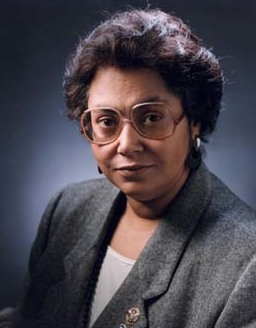
From VPDEI M. Dixon: Celebrating Women’s History Month & Dr. Patricia S. Cowings 

Dr. Patricia S. Cowings (1948-present) was born and raised in the Bronx, New York City. Her career at NASA began in 1971 as a graduate student when she received a fellowship in NASA’s Graduate Research Science Program. She graduated in 1973 with her psychology doctorate from UC Davis.

A few years later in 1979, she became the first African American woman scientist to be trained as an astronaut by NASA. Though she never made it to space, she spent her 34-year career at NASA researching the effects of gravity on human physiology and performance.

Dr. Cowings helped develop and patent the Autogenic-feedback training exercise (AFTE) method and system. This intense 6-hour training was developed to teach astronauts to voluntarily control their physiological responses (space sickness). In 2009, Patricia was inducted into the Women in Technology Hall of Fame (WITI). We celebrate Dr. Patricia S. Cowings and her advancements for women in STEM.

Melanie Dixon

Pronouns: she/her/hers Why pronouns?

Vice President of Diversity Equity and Inclusion

Building 1000 (Administration) Room 1019A

New Study Away Program to Alabama, to be offered Spring Break 2024

Congratulations to faculty members DuValle Daniel and Brooke Zimmers for their collaborative, successful grant application to develop and lead a study away program at the conclusion of the Winter quarter, of 2024.  Daniel, Zimmers, and their students will follow a segment of the Civil Rights / Freedom Rider Trail, from Birmingham to Montgomery, Alabama.

The group will visit several important sites to the U.S. Civil Rights Movement and will engage with locals who participated in the movement.  Plans include visiting the 16th Street Baptist Church in Birmingham where in 1963, a bomb exploded killing four young black girls and injuring many others, drawing national attention to the hard-fought and often dangerous struggle for civil rights for African Americans. In Montgomery, they will visit the Freedom Rides Museum and the Legacy Museum: From Enslavement to Mass Incarceration. Afterward, they will visit the powerful National Memorial for Peace and Justice which recognizes the thousands of lynchings that occurred across the United States. In Selma, the group will visit the National Voting Rights Museum. They will also walk across the Edmund Pettus Bridge, challenged to imagine the fear and bravery of the Black citizens who in 1965 walked the bridge toward an ‘army’ of white Alabama state and local police officers, and were brutally beaten. The harsh history of African Americans in the United States will be made clear through these potent experiences and faculty-led discussions.   


Shoreline students enrolled in Zimmers’ or Daniel’s Winter Quarter 2024 classes, Communicating for Social Change (CMST 203), African American Literature (ENG 247 or 247W), English 101, or English 102, will engage in readings, discussions, and writings exploring systems of power and privilege with a focus on the significance of the Civil Rights Movement of the 50s and 60s, and the connection to present-day police violence and voter suppression tactics. The Alabama study away program will serve as an optional final project for students in these courses.


The mini-grant funding for this project was sourced by the International Education department through a College Innovation grant.  Please direct questions regarding this project to Colleen Ferguson at cferguson@shoreline.edu

Celebrating Women’s Health and Disabilities with the Accessibility Advisory Committee

Happy Women’s History Month from the Accessibility Advisory Committee!

In celebration of the nearly four billion women in the world, including the many brilliant women at Shoreline Community College, the Accessibility Advisory Committee (AAC) will focus on women with disabilities and women’s health this March.

According to the United Nations, approximately one in five women live with a disability. Says the Centers for Disease Control and Prevention (CDC) Disability and Health Promotion, about 36 million women in the United States have disabilities, and approximately 44% of women aged 65 and older are living with a disability. Moreover, unemployment rates are the highest among women with disabilities due to the “double discrimination” they face. The United Nations estimates that 75% of women with disabilities are unemployed and those who are employed earn less than their counterparts who are not female and/or do not have disabilities.

In the past, many female-related diagnoses were not considered “disabilities,” per se. However, when the Americans with Disabilities Act Amendments Act of 2008 (ADAAA) was past, this changed and made a huge difference in the lives of many people. For example, those who have reproductive disorders (men and women) are eligible for accommodations, such as to go to medical appointments.

Is Pregnancy a Disability Under the ADA?

Pregnancy is not considered a “disability” in and of itself. People who are pregnant are protected at school and in the workplace under the Pregnancy Discrimination Act (PDA). However, individuals who have pregnancy-related disabilities would be protected by the ADA. For example, those who have been diagnosed with gestational diabetes, preeclamsia, or simply have been told by a physician that they cannot lift during pregnancy or that they are at high risk would all be eligible for accommodations under the Americans with Disabilities Act. Furthermore, though Post-Partum Depression is post-birth, it is still pregnancy-related and it is still a very serious mental health disability so is covered under the PDA and the ADA. At Shoreline Community College, students who are pregnant should work with Student Accessibility Services if they need accommodations, and employees should work with Human Resources, recognizes that they will also likely need to take FMLA for maternity leave.

PMDD, PMS, and Menstruation

Premenstrual Dysphoric Disorder (PMDD) is not the same as Premenstrual Syndrome (PMS). PMDD is a significant mental health disorder which can cause anxiety, sadness, anger, and more. PMDD only affects approximately 8% of women, but those who are accurately diagnosed may need to be treated in a variety of ways, including with medication, due to the severity of their symptoms. 

Individuals with PMDD as well as well as those with significant symptoms from PMS and menstruation, such as migraines, severe cramping, and gastrointestinal problems may be eligible for accommodations at school and in the workplace.

Risks for Women

Due to their body structure, and because they menstruate for several decades, women are at particularly high risk for some disabilities. Specifically, we see anemia in nearly all women. Women are also highly at risk for arthritis; this is the most common cause of disability among older women. For those of us who spend our days in sedentary jobs, typing at computers, the risk not only goes up, but the effects will be seen sooner.

Resources

How are we doing?

Please submit feedback about the information that the Accessibility Advisory Committee shares, or any questions that you have, to Miranda Levy via email at mlevy@shoreline.edu so that the committee can review together and serve the campus community better.

New Faculty Positions Available!

Come join our fantastic faculty!

Please share with your professional connections as well and have a great day!

Warmly,

Aleksa Overby

Human Resources Consultant

Office of Human Resources & Employee Relations

Nominations Requested: Do you know a ctcLink STAR?

Dear Colleagues,

Do you know someone who has gone above and beyond during the past year of ctcLink implementation? Is there a person who’s been your go-to contact for ctcLink support in your area or for campus as a whole? Has there been someone within your unit that stands out for their ongoing efforts to stabilize with the new ctcLink system?

Tell us by completing the ctcLink Star nomination form between now and Tuesday, March 14th  for acknowledgement at the upcoming ctcLink 1 year anniversary event.  Nominations can be made for as many individuals as you like, and we encourage you to share outstanding colleagues names.

Thank you!

Veronica Zura
Executive Director of Human Resources

Shoreline Community College
www.shoreline.edu  |  206.546.7858