Announcing Shanon Ehmke Reedy as Dean of Communication Studies and Social Sciences 

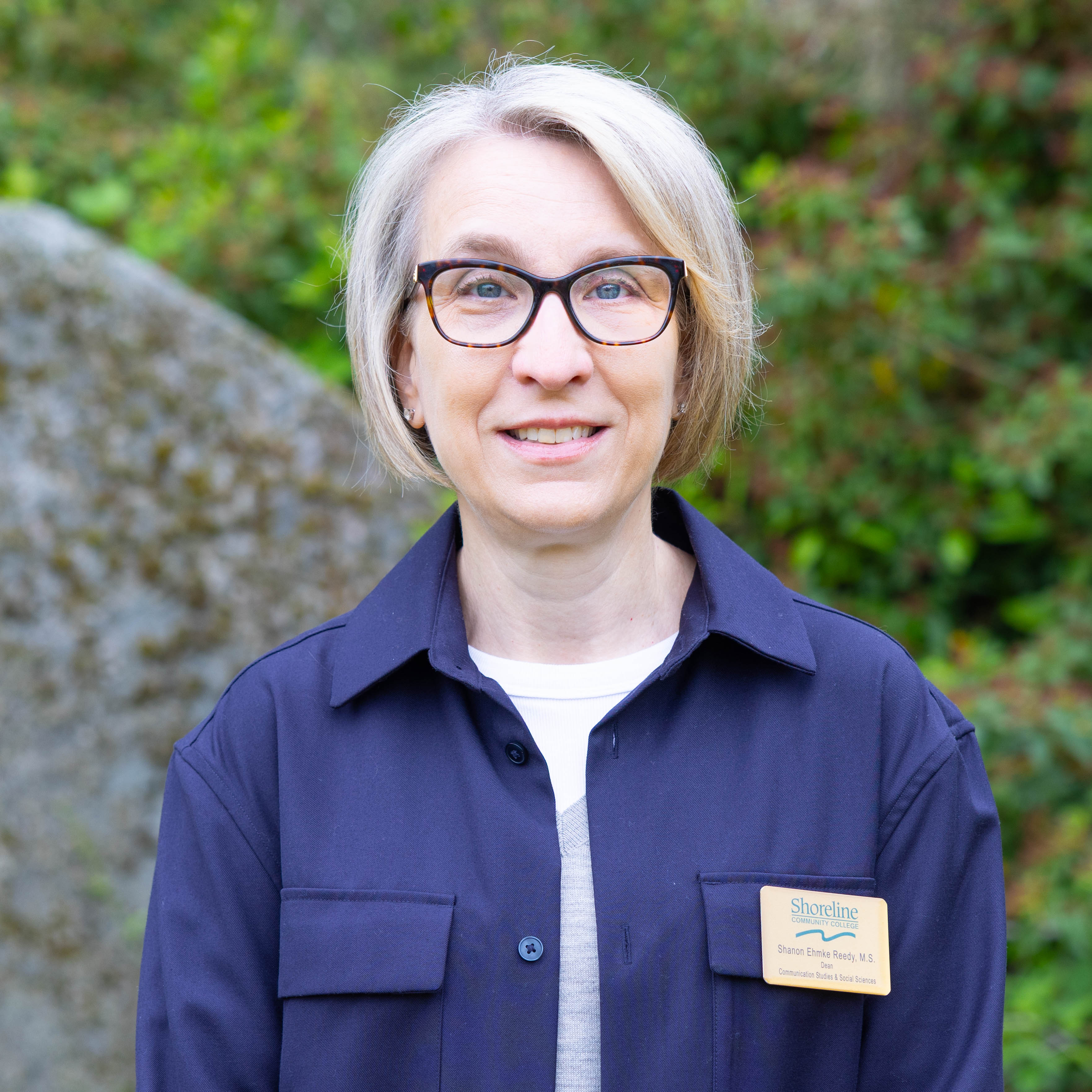
Headshot of Shanon wearing a white tshirt and a navy button-down over it

We are pleased to announce that Shanon Ehmke Reedy has been selected as the permanent Dean of Communication Studies and Social Sciences at Shoreline Community College.  Dean Ehmke Reedy brings more than 25 years of experience in higher education, having served in leadership and teaching roles at institutions including Black Hawk Community College, National Louis University, Roosevelt University, the University of Washington, and Bellevue College. Her background includes over a decade of teaching social science courses at Roosevelt University and, more recently, teaching MKTG 461, Marketing Research II in the Bachelor of Applied Science Digital Marketing program at Bellevue College. 

In addition to her campus-level contributions, Ehmke Reedy has helped shape statewide initiatives through her work with the Dean’s Academy and as a founding member of the Baccalaureate Leadership Council. She holds a Bachelor of Arts in Psychology from the University of Kansas and a Master of Science in Industrial-Organizational Psychology from Illinois State University. 

Dean Ehmke Reedy is passionate about developing and supporting innovative educational programs that expand opportunities for students, including community college baccalaureate degrees and workforce-driven associate degrees and certificates. She is dedicated to advancing institutional marketing strategies that enhance outreach and engagement. Additionally, she focuses on creating inclusive programming tailored to the needs of adult learners, first-generation college students, and individuals from diverse cultural and socioeconomic backgrounds, ensuring that every student has access to meaningful educational experiences.  

“I am excited to step into the permanent role of Dean of Communication Studies and Social Sciences,” said Ehmke Reedy. “This division is filled with passionate, innovative, and dedicated individuals, and I cannot wait to continue collaborating with each of you. I am eager to listen to your ideas and work alongside you to shape the future of our division in a way that prioritizes student success.” 

Outside of work, Shanon enjoys spending time with her family—skiing and snowboarding with her 16-year-old son Ethan, visiting her daughter Ella in Los Angeles, bowling with her husband Chris, and walking Ruby, their chocolate lab. 
Celebrating Pride Month:  The intersection of Accessibility and the LGBT+ Community

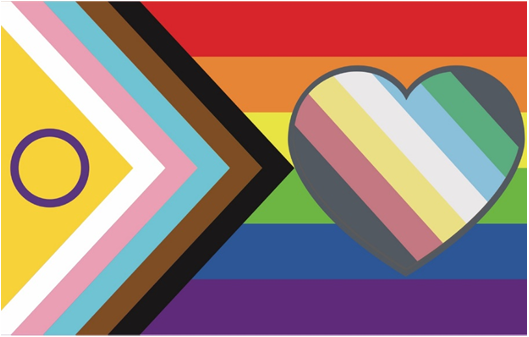
This image has flag related symbols of Pride Month

In 1973, homosexuality was officially removed from the Diagnostic and Statistical Manual of Mental Disorders (DSM), marking a historic shift in the medicalization of queer identity. Yet, even after this major milestone—and the later removal of “ego-dystonic homosexuality” in 1987—the queer community has continued to grapple with intersecting systems of oppression. 

Today, it’s estimated that 3 to 5 million LGBTQ+ people in the United States live with a disability. Despite the queer community’s history of resilience and mutual support, LGBTQ+ individuals with disabilities still face significant barriers to inclusion, even within LGBTQ+ spaces themselves. Pride events, for example, can be inaccessible due to physical limitations like a lack of ramps, accessible restrooms, reserved seating, or the absence of sign language interpretation. As a result, many queer disabled people are excluded from the very celebrations meant to affirm their identities.

Fortunately, organizations like  The Trevor Project are pushing back. They’re working to dismantle ableism and heteronormativity together, recognizing that liberation for one part of the community must include all of us.

The statistics are eye-opening.  A study by The Trevor Project found that among LGBTQ+ youth with disabilities:

  • 48% had been diagnosed with ADHD
  • 32% with a developmental or learning disorder
  • 28% with a physical disability
  • 72% with a mental health disorder

To put that last number in perspective, the national average of depression among all adults aged 18–25 is 18.6%. The disparity speaks volumes. LGBTQ+ individuals, especially those with disabilities, are more likely to experience discrimination, bullying, and social rejection, all of which contribute to increased rates of depression, anxiety, and other mental health issues.

It’s also important to understand that disability does not determine a person’s gender identity or sexual orientation. Disabled people can be gay, straight, trans, nonbinary, or anywhere else on the gender and sexuality spectrums. Yet, disabled individuals are often infantilized, their identities questioned or dismissed entirely, even in adulthood. This dehumanization deepens the disparagement they face and limits their access to affirming spaces.

The overlapping experiences of ableism and queerphobia lead to compounded challenges in schools, where bullying is more common; in healthcare, where bias can lead to inadequate care; and in the workplace, where discrimination and lack of accommodations contribute to higher unemployment and poverty rates.

These realities highlight a call to action for college campuses, healthcare providers, employers, and LGBTQ+ organizations alike. True inclusion means recognizing and actively removing barriers, not only physical ones but cultural and systemic ones as well. Creating accessible and affirming environments isn’t optional; it’s essential. Shoreline has a unique opportunity to push this conversation forward. When we are organizing events, designing buildings, working on policy, or simply being a better ally, our actions can help shape a world where disabled LGBTQ+ people are not only included, but truly celebrated.

How are we doing? 

Please submit feedback about the information that the Accessibility Advisory Committee shares to Miranda Levy via email at mlevy@shoreline.edu so that the committee can review together and serve the campus community better.

Shoreline Community College Announces Name Change to Shoreline College 

At the May 2025 Board meeting, the Shoreline Community College Board of Trustees voted to officially change the institution’s name to Shoreline College, a strategic change that reflects the College’s growth, while reaffirming its deep commitment to student success, equity, and community engagement. This decision came after a community-wide survey was conducted asking participants to vote on whether the college’s name should change or not. 

“It was exciting to watch the process unfold. I had no idea how the poll results would turn out, so it was great to see a strong majority across all groups supporting the same outcome. This name change is a great opportunity for us to strengthen our identity,” said President Jack Kahn. 

The shift to Shoreline College underscores the institution’s long-standing priorities: making education accessible, valuing student voice, and ensuring equity across programs and services. It also reflects a forward-looking vision that recognizes and celebrates the diversity of student experience as essential to academic and community success. A simplified name like Shoreline College supports clearer recognition, particularly for international audiences and new student populations. 

The name change comes as the College continues to expand its academic offerings, workforce training programs, and global reach. The change aligns with a growing trend among two-year institutions nationwide to adopt simpler, more inclusive names that reflect diverse pathways to student success, including transfer degrees, professional certificates, and applied bachelor’s degrees.  Last year the College announced it had received approval to offer its first bachelor’s degree, a Bachelor of Applied Science in Dental Hygiene. 

A new logo and visual identity are currently in development, and the College will invite students, alumni, employees, and community members to participate in the selection process this fall. The full brand launch, including the updated logo and campus signage, is planned for the first half of 2026. 

In the meantime, the College will begin introducing the name Shoreline College in select communications, particularly those focused on international outreach, while continuing to use Shoreline Community College in broader public-facing materials during the transition. 

President Kahn shared, “I think the most challenging part of making this recommendation to the board was the concern that removing the word ‘community’ might suggest a reduced focus on community itself. But that couldn’t be further from the truth. Our mission, board, and broader community remain deeply committed to proactive, action-oriented engagement. Community will always be at the heart of everything we do.” 

Shoreline College Name Change Timeline

As you may know, our Board of Trustees recently approved a name change from Shoreline Community College to Shoreline College. We’re excited about this evolution and want to share some details on how and when the name change will occur. Below is a high-level roadmap for how we’ll roll out the name change and new brand identity. 

Phase 1: Now-Start of the Summer Quarter 2025

Goal: Provide clarity, get ahead of rumors, and start using the new name strategically.

  • We will begin the process of changing our name administratively (e.g. paperwork for taxes, etc.) and that may take some time. 
  • We’ll begin using Shoreline College in select, targeted ways, particularly in international outreach, swag etc., where clarity and recruitment are key. 
  • Materials may include a note like: “Formerly Shoreline Community College” for continuity. 
  • We will not be releasing a temporary logo or any kind of updated branding during this phase. 
  • A blog post/announcement will go live the week of June 9th to reinforce the message publicly. 
  • We’ll continue to use our current logo and name across most materials until the full launch. 

Internal communication is key: You’ll be our ambassadors in helping answer questions and avoid confusion. Thank you in advance for your help! 

Phase 2: Summer–Fall 2025

Goal: Engage our community in logo design

  • We’ll begin developing new logo concepts this summer. 
  • Just like we did for the 60th Anniversary mark, early logo concepts will be reviewed internally, then shared publicly for a college-wide vote in early fall. 
  • Depending on the feedback, we may run a second round of voting. 
  • We’ll launch a “What’s Next for Shoreline College?” landing page with:
    • A timeline of the transition 
    • FAQs 
    • A placeholder for the logo reveal 

Phase 3: Early 2026 – June 2027

Goal: Full brand launch

  • We’ll officially unveil the new logo and visual identity in early 2026. 
  • Beginning in the first half of 2026, we’ll update signage, digital assets, email signatures, printed materials, social media, and more. 
  • All use of the old name and logo will be phased out by June 30, 2027. 
  • This will give us time to cycle through any remaining swag, stationary etc. and to transition our marketing materials  

A list of quick FAQs is below.  Please keep in mind that this plan is a work in progress and remains flexible.  As we move through the steps, we may find that some things take longer than others, so we appreciate your patience. If you have any other questions, please don’t hesitate to reach out. 

Quick FAQ for Faculty, Staff, and Students

Why are we using the new name before the new logo is ready?
We’re being strategic about where we use the name early (like in international marketing- we think the name change will be helpful in recruiting new students abroad) while keeping the current logo in place until we roll out a complete brand package in 2026. 

Are we designing a new logo?
Yes! Logo development will take place this summer, and the top options will be shared for community voting in early fall after classes begin. 

How can I get involved?
Watch for opportunities this fall to vote on logo options and provide input. We’ll also post updates on a new landing page later this summer. 

When will the new logo be official?
The full launch is planned for the first half of 2026. We’ll begin using it in stages, with all materials updated by June 2027.  It will take time to make all of the necessary updates. 

Can I still use the old name or logo?
Yes, for now. Please continue to use Shoreline Community College branding unless you’re working on a project where Shoreline College has been approved for strategic use (e.g., international outreach). We’ll provide clear guidance as the transition unfolds. 

What if I get questions from students or the public?
Let them know the name has officially changed, the new logo is coming in 2026, and all services, programs, and commitments remain the same. 

Wave of Gratitude

A Wave of Gratitude to Brandon Fryman for Inclusive Excellence, Community Engagement and Training.

I want to recognize Brandon Fryman for his incredible presentation at the Day of Learning. His talk on Native Americans in our region was powerful, thought-provoking, and deeply humanizing. He didn’t just talk about the past—he helped us understand where Native communities are today. Brandon highlighted that Native people in Washington are artists, politicians, business owners, and nonprofit leaders. They are shaping the future while carrying forward the strength and resilience of their ancestors.

Brandon also shared the important work he’s doing in the community—supporting Native students, working with nonprofits and tribal leaders, and collaborating with different departments on campus to build stronger support systems. His presentation helped me realize how much I still have to learn, and it inspired me to do better in my own role. The activities he led helped me connect more deeply and made me reflect on how I can more thoughtfully serve Native students and colleagues. Now if you walk in the FOSS building, you see all the maps of the tribes within our state. This will have a long-lasting impact on what I do here on campus.

Thank you, Brandon, for your leadership, your heart, and your dedication to this work. I hope we get to hear more from you in the future. – Submitting person wishes to remain anonymous

As a reminder, for those wishing to acknowledge the work of fellow shoreline staff members or a group at Shoreline, you need only submit a Waves of Gratitude form for individuals or a Shoreline Shoutout for groups.