Call for Feedback on Clean Energy Technology Program

The Office of Instruction is evaluating the future of the Clean Energy Technology program and would appreciate your feedback. Based on the status report that was emailed to all college staff on Jan. 15, the Office of Instruction may recommend that Shoreline Community College close the Clean Energy Technology program. This recommendation is based on two primary factors: declining enrollment and a lack of employment opportunities that specifically require the degrees offered.

Declining Enrollment

The report indicates a significant decline in enrollment since 2016. Pre-pandemic enrollment was approximately three times higher than current rates, and the downward trend has been steady. As of Fall 2024,

  • Clean Energy Technology & Entrepreneurship AAAS: 7 current students
  • Clean Energy Technology & Entrepreneurship Certificate of Proficiency: 4 current students
  • Amazon Career Choice Clean Energy Technology Certificate of Completion: No current students (pending approval)

Concern of program sustainability: With such few students, it becomes challenging to justify the allocation of resources, including faculty time and budget.

Employment Opportunities

The report highlights two primary job types for graduates: Solar Associate/Solar Sales Representative and Energy Auditor. However, these roles do not necessarily require the specific degrees offered by the programs.

Implications:

  • Degree Relevance: Students may not see the value in pursuing these programs, which further contributes to declining enrollment.
  • Career Pathways: Students may benefit more from the College’s other programs that align more closely with market demands and provide clear career pathways.

Conclusion

Based on the data and the trend, the Office of Instruction is in favor of recommending the closure of the Clean Energy Technology programs. This decision would allow the College to reallocate resources to more viable programs, ultimately benefiting the institution and its students.

Next Steps

  • Stakeholder Consultation: In January 2025, the Office of Instruction will:
    1. present at the 1/22 Faculty Senate Council,
    2. hold a virtual town hall on Tuesday 1/21, 11:30a-12:30p (Zoom ID: 88570458474),
    3. gather feedback with a form at https://forms.office.com/r/7aE6n9gaJw, and
    4. discuss with the advisory board of the program.
  • Transition: If the closure is recommended, the Office of Instruction will develop a plan to support current students in completing their programs or transitioning to other relevant programs. The transition plan and the closure proposal will move to the College Council, the Executive Team and the Board of Trustees for approval.
  • Implementation: If the Board of Trustees approves the closure, the College will complete the external processes with SBCTC and NWCCU.
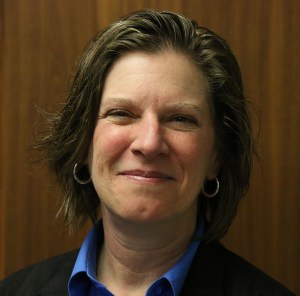
From student to project lead: Clean Energy Tech’s Louise Petruzzella

louise pLouise Petruzzella, director of Shoreline’s Clean Energy Technology program, got the following great press in Community College Daily. Congrats, Louise! Keep up the great work!

From student to project lead
by Madeline Patton, Published December 9, 2015
In her first year as the inaugural director of the Clean Energy Technology & Entrepreneurship program atShoreline Community College in Washington, Louise Petruzzella doubled enrollment from 20 to 40 students, reactivated the industry advisory committee and placed all 10 graduates in jobs.

She attributes her accomplishments to several things: a MentorLinks grant, her experience as a graduate of the associate degree program and the subject matter expertise of her five faculty colleagues.

“I have an edge because I was a student in the program,” said Petruzzella, who enrolled in winter 2012 and finished her associate degree in clean energy technology in 2014.

A few other career experiences certainly contributed to Petruzzella maximizing the mentoring, professional development and $20,000 in program development support provided by the MentorLinks grant that theAmerican Association of Community Colleges awarded to her through its Advanced Technological Educationgrant from the National Science Foundation.

“Without MentorLinks, it wouldn’t have been possible. It’s not about the money. It’s about the cachet,” she said.

A new career path

While Petruzzella was a clean energy technology novice before enrolling at Shoreline, her 15 years of teaching philosophy as a part-time instructor at various colleges gave her an unusual perspective of the program’s potential and how to instigate organizational changes to improve it.

IMG_9080

Shoreline Community College students assess a site for a vegan farmer’s solar energy project.

Her experience in construction — having worked for her dad’s general contracting business as a teenager and used home renovation jobs to pay her college tuition — made her acutely aware of the challenges employers face and their expectations for employees.

Ironically, it was her difficulty finding steady employment in both those fields that led her to become a student at Shoreline.

After earning a bachelor’s degree in religious studies and philosophy from University of San Diego and a master’s degree in theological studies from Emory University, Petruzzella taught philosophy as an adjunct faculty member at several colleges, including Metropolitan Community College in Nebraska and Pima Community College in Arizona, where she began her postsecondary education as a transfer student.

When she moved to Washington several years ago, the recession was setting in and she could not find a teaching job. To pay her bills, she went back to construction until she was laid off. When an unemployment office staffer offered retraining, Petruzzella chose the clean energy technology (CET) program at Shoreline.

She liked what she was learning in her CET courses, but was frustrated by the lack of program leadership and structure to help students obtain internships and jobs.

Input from a student’s perspective

“I thought, ‘This is not right. We’re not supporting our students as they need and deserve,’” she explained.

Midway through the program, even as she picked up adjunct teaching assignments (including the CET program), Petruzzella began formulating ways to improve Shoreline’s program and use her unusual skill set. She started talking to anyone on campus who would listen to her. Her message: “You have a potentially wonderful program, but you need someone to run it and I suggest you hire me.”

College administrators were persuaded and started a formal search for the program’s first leader. Shortly after she was hired, Petruzzella and the college’s grant writer completed the MentorLinks grant application. “I already had a vision of what I wanted to happen in the program,” she said.

Kenneth A. Walz, Petruzzella’s MentorLinks mentor, points out that most new faculty members spend their first year getting their bearings, not remaking a program. Walz teaches chemistry and engineering instructor at Madison Area Technical College (MATC) in Wisconsin and is principal investigator of Career Education in Renewable Energy Technologies, an ATE project at MATC.

Petruzzella added three new courses, revised several introductory courses for online delivery, led with Walz a multi-day biofuels workshop for educators, hosted a regional renewable energy industry conference and established partnerships with a neighboring community college and university.

During the second year of the MentorLinks grant, Petruzzella plans to involve the industry advisory committee (which she grew from four to more than 30 members) in a formal curriculum review to shift the program’s focus to high-performance buildings as a state-funded solar energy initiative ends in 2016. She hopes to grow enrollment to 60 students.

“When I say it helped that I was a student in the program, I mean that. I want the success of my students. I saw where the program wasn’t doing what it should be doing for our students. So that’s what really inspires me. To make sure they are getting relevant training, that they are going to be employed, that they are going to have an internship if they want. That’s what’s really driving me,” she said.

Her one-year contract was extended through June 2016 with support from the college’s Innovation Fund, and the ongoing status of the position is currently under consideration.

Shoreline to Host National Science Foundation’s Train the Trainer Renewable Energy Biofuels Academy, Aug. 17-21

The week of Aug. 17-21 Shoreline will play host to the National Science Foundation’s Train the Trainer Renewable Energy Biofuels Academy, which will bring instructors from around the nation, including from as far away as the Virgin Islands, to our campus to learn how to bring biofuels education back to their own classrooms. Designed for high school and two-year college science, agriculture and technical education instructors, this hands-on academy will cover the fundamentals of biofuels with an emphasis on fuel production, quality control, engine performance and vehicle emissions.

Shoreline was chosen to host this event as part of winning a National Science Foundation grant. In addition to the week’s host of educational activities, participants will also learn how to turn used cooking oil into biofuel. The resulting fuel will be donated to 21 Acres, a Woodinville-area non profit dedicated to sustainability.