Celebrating Asian American & Pacific Islander Month in May- Check out this wonderful learning opportunity!

Please join us to learn more about the Asian American and Pacific Islander (AAPI) student experience. 

Presentation: Supporting Asian American and Pacific Islander (AAPI) Students With a Culturally Competent Lens 

Presenter: Dr. Joan King

Date/Time: Thursday, May 11, 2023, from 10:00am-11:30am Location: Classroom 2206

Description:Overview of Asian American biases within society, professional environments, education, and even within DEI work. It will draw attention to the deficiencies in which we discuss racial equity regarding Asian American advocacy and disrupt white-centered expectations of Asian Americans. As DEI work is inherently polarized (Black or White), this training will educate the audience with the harm in continuing DEI work that continues to ignore Asian American experiences with discrimination and racism in America. 

The specific topics covered will be as follows (but not limited to): 

  • Double Eyelid Bias
  • Lack of educational support and differentiation for Asian American students due to the Model Minority Myth
  • The lack of socioemotional support for Asian American students when anxiety and intergenerational trauma due to possible immigrant trauma is high
  • The onus of communication (as discussed by Malcolm Gladwell) within Asian American communities, the impossibility of Asian American stereotypes given their conflicting natures

OR

Presentation: Supporting AAPI Students With a Culturally Competent Lens 

Presenter: Dr. Joan King

Date/Time: Thursday, May 11, 2023, from 2:00pm-3:30pm Location: Zoom https://us02web.zoom.us/s/83593195715

Description:Overview of Asian American biases within society, professional environments, education, and even within DEI work. It will draw attention to the deficiencies in which we discuss racial equity regarding Asian American advocacy and disrupt white-centered expectations of Asian Americans. As DEI work is inherently polarized (Black or White), this training will educate the audience with the harm in continuing DEI work that continues to ignore Asian American experiences with discrimination and racism in America. 

The specific topics covered will be as follows (but not limited to): 

  • Double Eyelid Bias
  • Lack of educational support and differentiation for Asian American students due to the Model Minority Myth
  • The lack of socioemotional support for Asian American students when anxiety and intergenerational trauma due to possible immigrant trauma is high
  • The onus of communication (as discussed by Malcolm Gladwell) within Asian American communities, the impossibility of Asian American stereotypes given their conflicting natures

We look forward to seeing you as we increase our collective awareness and develop strategies to create a more inclusive environment for our Asian American and Pacific Islander students and employees. 
The Month May Be Ending, But Women Make History All Year

Hello Shoreline Community, 

As we wrap up Women’s History Month, we will take this opportunity to recognize history makers and those still leaving their mark. I encourage all of you to learn more about these activists, innovators, cultural historians, scientists, and social justice warriors. I also encourage you to celebrate the women in your life as we wrap up this month focused on celebrating the greatness of women around the globe. 

Melanie Dixon

VP Diversity, Equity & Inclusion

Those Who Made History

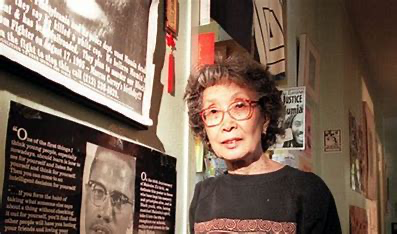
Yuri Kochiyama was a Civil rights activist and Nobel Peace Prize candidate and became energized to fight for social justice causes following her detainment in the U.S. Japanese concentration camps during World War II. From teaching Sunday School in her youth to fighting for political prisoners in her old age, Yuri Kochiyama remained humble yet became a fierce defender of human rights. Kochiyama saw the need for solidarity to fight injustices. Her activism spanned struggles for Black empowerment, Puerto Rican independence, and reparations for Japanese American internees. She forged an unlikely friendship with black activist Malcolm X, whose head she cradled in her arms as he died from twenty-one gunshot wounds. Their bond strengthened her dedication to the African American civil rights movement and her fight against U.S. imperialism. Her legacy of fighting for justice and equality lives on. We HONOR Yuri Kochiyamafor being a trailblazer for solidarity and justice. As we continue to engage in educational justice for our students, we can look to her leadership and commitment to humanity to draw strength. 

Hedy Lamarr was an Austrian American inventor who pioneered the technology that would one day form the basis for today’s Wi-Fi, GPS, and Bluetooth communication systems. Lamarr’s brilliant mind was ignored, and her beauty took center stage when she was discovered by director Max Reinhardt at age 16. Society elevated her beauty, but ignored her inventive genius.  Lamarr was not recognized for her numerous inventions until much later in life. Although she died in 2000, Lamarr was inducted into the National Inventors Hall of Fame for the development of her frequency hopping technology in 2014. Such achievement has led Lamarr to be dubbed “the mother of Wi-Fi” and other wireless communications like GPS and Bluetooth. We HONOR Hedy Lamarr for her innovative spirit and hope to channel this spirit as we serve our incredible brilliant students.

Ellen Ochoa was an American astronaut and administrator who was the first Hispanic woman to travel into space (1993). She later served as director of NASA’s Johnson Space Center from 2013-2018. Ochoa studied electrical engineering at Stanford University. She later became a specialist in the development of optical systems, she worked as a research engineer at Sandia National Laboratories and at the Ames Research Center of the National Aeronautics and Space Administration (NASA). She helped create several systems and methods that were awarded patents, which include optical systems for the detection of imperfections in a repeating pattern and for the recognition of objects. We HONOR Ochoa’s undeniable contributions to science and she serves as a model for all women considering a career in STEM fields. 

Those Still Making History

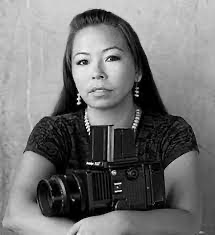
Matika Lorraine Wilbur is a member of the Swinomish and Tulalip tribes of the State of Washington where she was raised in a family of commercial fishermen. Matika received her teaching certification and worked in primary education at The Tulalip Heritage High School for 5 years. She is a photographer and artist who created Project 562 with the mission of humanizing and sharing stories of Native American in an honorable way. Wilbur’s work embodies the commitment educational institutions espouse as a core value. She shares “the time of sharing, building cultural bridges, abolish racism, and honoring the legacy that this country is build on is among us. My goal is to represent Native people from every tribe. By exposing the astonishing variety of the Indian presence, we will build cultural bridges, abandon stereotypes, and renew and inspire our national legacy. “We HONOR the work Matika Lorraine Wilbur is doing to tell the untold stories that will inform our existence on this land. 

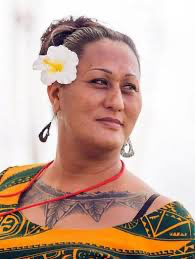
Hinaleimoana Wong-Kalu is a Kanaka Maoli (Native Hawaiian) teacher, cultural practitioner, and community leader. Born in the Nu’uanu District of O’ahu, Kumu Hina was educated at Kamehameha Schools and the University of Hawaii. She was a founding member of Kulia Na Mamo, a community organization established to improve the quality of life for māhū wahine (transgender women) and served for 13 years as the Director of Culture at a Honolulu public charter school dedicated to using native Hawaiian culture, history, and education as tools for developing and empowering the next generation of warrior scholars. Kumu Hina is currently a cultural advisor and leader in many community affairs and civic activities, including Chair of the O’ahu Island Burial Council, which oversees the management of Native Hawaiian burial sites and ancestral remains. In 2014, Hina announced her bid for a position on the board of the Office of Hawaiian Affairs, one of the first transgender candidates to run for statewide political office. We HONOR Hinaleimoana for creating spaces for all people and educating the ignorant about acceptance and the celebration of all identities. We aspire to have this same outlook as we continue to create a culture where our students and employees can be their authentic selves without fear of harm. 

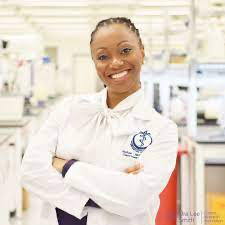
Dr. Hadiyah-Nicole Green is a STEM pioneer, leader, humanitarian, and entrepreneur who is introducing the world to the next generation of cancer treatments, cancer charities, and affordable healthcare. She is one if the nations leading medical physicists and one of the first African American Women to earn a Ph.D. in Physics. Dr. Green is responsible for developing a revolutionary cancer treatment that uses lasers and nanotechnology to eliminate cancer in mice. She later founded a non-profit organization names Ora Lee Smith Cancer Research Foundation to make cancer treatment affordable. We HONOR Dr. Greens contributions to social justice and science. Her work will continue to benefit those fighting cancer and all of us seeking a cure.

Ramadan

Salaam Shoreline Community,

I hope this message finds you all well and with a well-deserved break on the horizon. Ramadan starts TODAY! Thursday, March 23, 2023, for most Muslims, and I wanted to share a resource that might be helpful. Below are specific ways you can be intentional in centering the experiences of our students and colleagues:

  • “An easy way to make your Muslim students feel connected is to wish them a ‘Ramadan Kareem’ or ‘Ramadan Mubarak’ which both loosely translates to ‘Have a Blessed Ramadan.’
  • “Students who are fasting are going to be exhausted. Not only is this still a pandemic, but it is a tradition for families to wake up before dawn to have a meal before beginning the fast (known as suhoor), and it is a tradition for some to also stay up late praying with their families. Since Muslims are no longer able to pray together in a Masjid, students might be spending even more time in front of a screen for virtual worship activities, in addition to their virtual learning.”
  • “Prayer is important for Muslims all year round, and praying on time is also incredibly important, especially during Ramadan. Some families might want to pray together during the day because they are at home, even if students are expected by their teachers to be in a virtual class. You can look up the prayer times in your area and allow your students to miss a few minutes of virtual learning during those times if they wish to pray.”
  • “It might also be helpful if you avoided lessons or class activities or finals that revolve around food, eating, or drinking during the month of Ramadan as well.”
  • Students and colleagues may be celebrating the Eid-al-Fitr April 21-23. Eid is a time of celebration with family, friends, and community. There is communal prayers, feasting, new clothes, mendhi (henna) application, and joy to be had in this time. 

Ramadan is a time many Muslims look forward to because these days are focused on compassion, community, and connection to Allah. This month is not just about abstaining from food and drink, but also taking time to do some deep self-reflection to deepen one’s empathy, patience, honesty, and charity. 

Thank you in advance for helping your students and colleagues have a wonderful Ramadan. Here are some additional resources for information, readings, and ways of supporting the Muslim community during this time.

Digital Ramadan: https://www.digitalramadan.com/resources

Melanie Dixon

Pronouns: she/her/hers Why pronouns?

Vice President of Diversity Equity and Inclusion

Building 1000 (Administration) Room 1019A

Shoreline Community College

www.shoreline.edu  |  206-533-6682

From VPDEI M. Dixon: Celebrating Women’s History Month: Jovita Idár; Patsy Mink; Dr. Susan La Fleche Picotti; Captain Joellen Drag Oslund

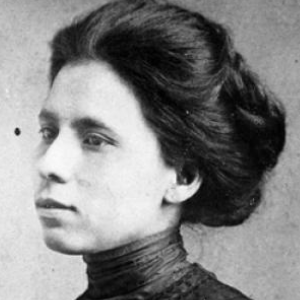
black adn white photo of Jovita Idár

Jovita Idár (1885-1946) was a Mexican-American journalist, activist, and suffragist.  From a young age she was exposed to the world of journalism and political activism. Her father was a newspaper editor and civil rights advocate. In 1903 Idár became a teacher and resigned due to the segregation and poor conditions Mexican American students were subject to. She began her journalism career at La Crónica, her father’s newspaper. In 1911 Idár and her family organized the First Mexican Congress. They advocated for Mexican-Americans and their lack of economic resources, and lack of education. Idár’s activism was just beginning. That same year she founded and became president of La Liga Feminil Mexicaista (the League of Mexican Women). This feminist organization was key in providing Mexican-American students with an education. During the Mexican Revolution, Idár served as a nurse taking care of injured Mexican soldiers.

She later returned to Texas and resumed her journalism work at the El Progreso newspaper. Where she wrote an article protesting President Woodrow Wilson’s decision to send U.S troops to the border. The U.S Army and Texas Rangers attempted to forcibly shut down the newspaper. Idár stood at the door and prevented them from entering. However, they later returned and shut down the newspaper. In her later years, Idár volunteered as a Spanish interpreter at a local hospital, and started a free kindergarten for children. We celebrate Jovita Idár’s advocacy for Mexican-Americans.


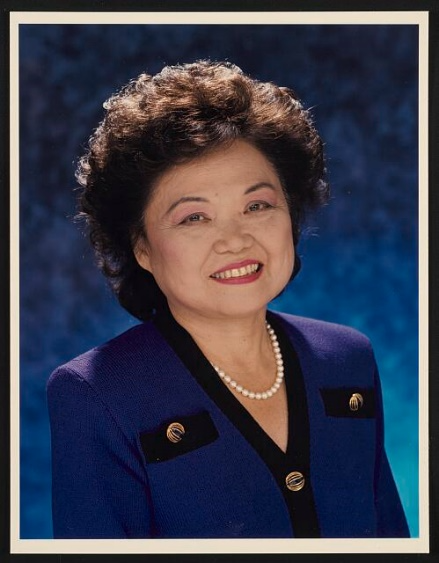
color photo of Patsy Mink

Patsy Mink (1927-2002) began her higher education journey at the University of Nebraska but later transferred to the University of Hawaii, after facing racial discrimination. Dorms were segregated and students of color were not permitted to reside in the same dorms as white students. Mink graduated in 1948 with the intention of becoming a doctor. She was denied admission to all medical schools she had applied to. She was later accepted to the University of Chicago Law School where she graduated in 1951. Mink returned to Hawaii, where she was unable to find a job because of her interracial marriage. Instead, she opened her own law practice. Making her the first Japanese-American woman to practice law in the state of Hawaii. Mink’s first attempt to become a congresswoman was unsuccessful. Not one to give up, in 1962 she won the Hawaii State Senate seat. Two years later in 1964 she was elected to the U.S House of Representatives. Becoming the first woman of color and first Asian-American woman in congress. During her political career she advocated for immigrants, minorities, and women. Mink was instrumental to the passage of Title IX. She was one of the key authors and sponsors behind it. We celebrate Patsy Mink and her advocacy work for women.


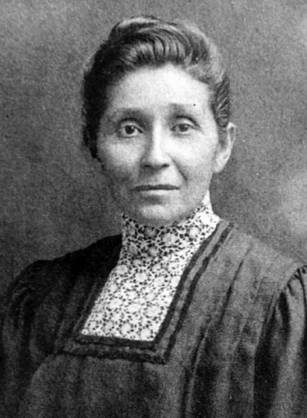
black and white photo of Dr. Susan La Fleche Picotti 

Dr. Susan La Fleche Picotti (1865-1915) was born on the Omaha Reservation in Nebraska. As a young girl she witnessed a sick American Indian woman die after being denied medical care by a white doctor. That horrific incident impacted La Fleche, and she pursued a medical degree. She attended the Hampton Institute, a prestigious higher education establishment for non-white students. Her mentor later encouraged her to apply to the Woman’s Medical College of Pennsylvania (WMCP). La Fleche became the first person to receive federal aid for a professional degree. She enrolled in the WMCP with federal funds from the U.S. Indian Affairs Office and the Connecticut Indian Association of the Women’s National Indian Association. In 1889, she graduated top of her class and became the first American Indian woman in the U.S to receive a medical degree. Upon completing her internship, she returned home to provide medical care at the Omaha Reservation. Where she was responsible for the care of approximately twelve hundred people. In 1913 she fulfilled her dream of opening a hospital in Walthill, Nebraska. We celebrate Dr. Susan La Fleche Picotti for her help providing proper medical care to the Omaha Tribe in Nebraska. 


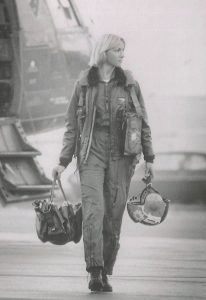
black and white photo of Captain Joellen Drag Oslun

Captain Joellen Drag Oslund is known for her advocacy against federal laws excluding women from serving on U.S Navy ships. Only fifty years ago, the Navy flight training program opened its doors to women for the first time. Joellen Drag Oslund, along with six other women became known as “The First Six” female aviators. In 1974 Oslund earned her “Wings of Gold”. When she became the fourth female aviator and first female helicopter pilot. During this time federal laws excluded women from serving on U.S Navy ships. Following military procedure Captain Joellen Drag Oslund wrote a letter to the Chief of Naval Operations. That letter never made it up the chain of commands. In response Oslund joined forces with the ACLU and legally challenged those federal laws in Owens vs. Brown (1978).  Successful in her endeavors, Oslund become the first Navy woman pilot to serve aboard a U.S. Navy ship. During her five years of active service Captain Joellen Drag Oslund became the first Navy woman Combat Search & Rescue (CSAR) helicopter aircraft commander. We celebrate Captain Joellen Drag Oslund for her advocacy of women in the military.


Melanie Dixon

Pronouns: she/her/hers Why pronouns?

Vice President of Diversity Equity and Inclusion

Building 1000 (Administration) Room 1019A

Shoreline Community College

www.shoreline.edu  |  206-533-6682

From VPDEI M. Dixon: DEI Virtual Workshop Intersectionality and Women’s History w/A. Hauser (Wed, Mar 15, 2023; 1-2:30 PM)

Intersectionality and Women’s History 

Facilitator: Aisha Hauser 

Date/Time: Wednesday, March 15, 2023, 1– 2:30pm 

Session Details: 

This program will focus on what it means to include multiple identities when challenging systems of oppression. We will focus on Women of Color and especially the challenges to equity in spite of the feminist movement. We will also touch on the complexity of the feminist movement since the time of the suffragettes. 

Zoom Link:  https://us02web.zoom.us/j/82154935674