Disability Awareness Month Tip for Mon., Oct. 19: Emotional Intelligence

Young woman holding emotive masks

In honor of Disability Employment Awareness Month, the Office of Special Services (OSS) is working to raise awareness of disabilities by offering daily facts and tips about people with disabilities and living with disability. Please take a minute to read and broaden your understanding.

“All learning has an emotional base.” — Plato

The ability to express and control our emotions is essential, but so is our ability to understand, interpret, and respond to the emotions of others. Imagine a world where you could not understand when a friend was feeling sad or when a co-worker was angry. Psychologists refer to this ability as emotional intelligence, and some experts even suggest that it can be more important than IQ.

Learn more about exactly what emotional intelligence is, how it works, and how it is measured.

What is Emotional Intelligence?

Emotional intelligence (EI) refers to the ability to perceive, control and evaluate emotions. Some researchers suggest that emotional intelligence can be learned and strengthened, while others claim it is an inborn characteristic.

The Four Branches of Emotional Intelligence

Salovey and Mayer proposed a model that identified four different factors of emotional intelligence: the perception of emotion, the ability reason using emotions, the ability to understand emotion and the ability to manage emotions.

  1. Perceiving Emotions: The first step in understanding emotions is to perceive them accurately. In many cases, this might involve understanding nonverbal signals such as body language and facial expressions.
  2. Reasoning With Emotions: The next step involves using emotions to promote thinking and cognitive activity. Emotions help prioritize what we pay attention and react to; we respond emotionally to things that garner our attention.
  3. Understanding Emotions: The emotions that we perceive can carry a wide variety of meanings. If someone is expressing angry emotions, the observer must interpret the cause of their anger and what it might mean. For example, if your boss is acting angry, it might mean that he is dissatisfied with your work; or it could be because he got a speeding ticket on his way to work that morning or that he’s been fighting with his wife.
  4. Managing Emotions: The ability to manage emotions effectively is a crucial part of emotional intelligence. Regulating emotions, responding appropriately and responding to the emotions of others are all important aspect of emotional management.

According to Salovey and Mayer, the four branches of their model are, “arranged from more basic psychological processes to higher, more psychologically integrated processes. For example, the lowest level branch concerns the (relatively) simple abilities of perceiving and expressing emotion. In contrast, the highest level branch concerns the conscious, reflective regulation of emotion” (1997).

A Brief History of Emotional Intelligence

  • 1930s – Edward Thorndike describes the concept of “social intelligence” as the ability to get along with other people.
  • 1940s – David Wechsler suggests that affective components of intelligence may be essential to success in life.
  • 1950s – Humanistic psychologists such as Abraham Maslow describe how people can build emotional strength.
  • 1975 – Howard Gardner publishes The Shattered Mind, which introduces the concept of multiple intelligences.
  • 1985 – Wayne Payne introduces the term emotional intelligence in his doctoral dissertation entitled “A study of emotion: developing emotional intelligence; self-integration; relating to fear, pain and desire (theory, structure of reality, problem-solving, contraction/expansion, tuning in/coming out/letting go).”
  • 1987 – In an article published in Mensa Magazine, Keith Beasley uses the term “emotional quotient.” Some suggest that this is the first published use of the phrase, although Reuven Bar-On claims to have used the term in an unpublished version of his graduate thesis.
  • 1990 – Psychologists Peter Salovey and John Mayer publish their landmark article, “Emotional Intelligence,” in the journal Imagination, Cognition, and Personality.
  • 1995 – The concept of emotional intelligence is popularized after publication of psychologist and New York Times science writer Daniel Goleman’s book Emotional Intelligence: Why It Can Matter More Than IQ.

Measuring Emotional Intelligence

“In regard to measuring emotional intelligence – I am a great believer that criterion-report (that is, ability testing) is the only adequate method to employ. Intelligence is an ability, and is directly measured only by having people answer questions and evaluating the correctness of those answers.” –John D. Mayer

  • Reuven Bar-On’s EQ-i
    A self-report test designed to measure competencies including awareness, stress tolerance, problem-solving, and happiness. According to Bar-On, “Emotional intelligence is an array of noncognitive capabilities, competencies, and skills that influence one’s ability to succeed in coping with environmental demands and pressures.”
  • Multifactor Emotional Intelligence Scale (MEIS)
    An ability-based test in which test-takers perform tasks designed to assess their ability to perceive, identify, understand, and utilize emotions.
  • Seligman Attributional Style Questionnaire (SASQ)
    Originally designed as a screening test for the life insurance company Metropolitan Life, the SASQ measures optimism and pessimism.
  • Emotional Competence Inventory (ECI)
    Based on an older instrument known as the Self-Assessment Questionnaire, the ECI involves having people who know the individual offer ratings of that person’s abilities in several different emotional competencies.

The above information and more can be found here.
Disability Employment Awareness Month Tip for Oct. 16: Facts About Depression

depression
In honor of Disability Employment Awareness Month, the Office of Special Services (OSS) is working to raise awareness of disabilities by offering daily facts and tips about people with disabilities and living with disability. Please take a minute to read and broaden your understanding.

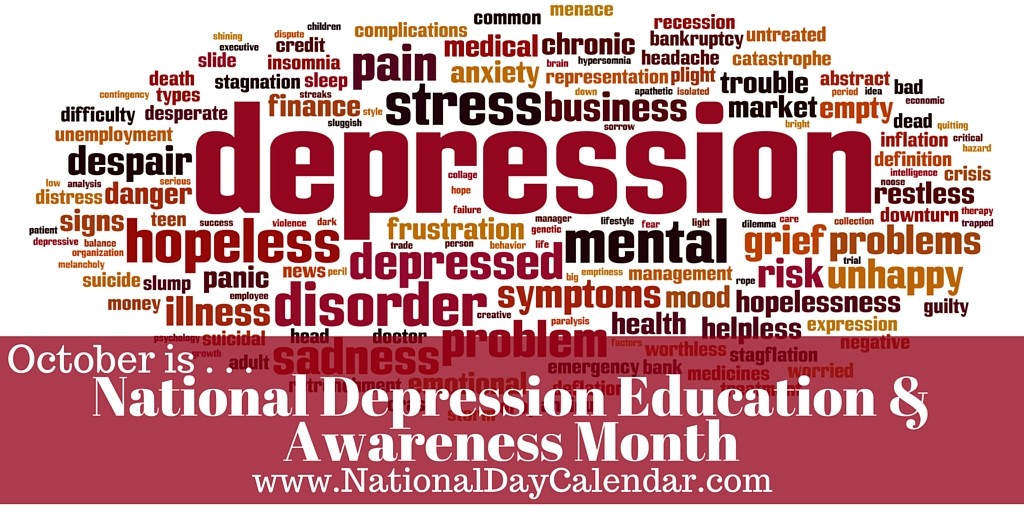
October is National Depression Education & Awareness Month!
October is National Depression Education and Awareness Month, and it’s the perfect time to shine a light on what has been called “the common cold” of mental illness. Depression affects more than 19 million Americans each year. This figure includes the following types of depression:

  • Major depressive disorder (also called major depression or clinical depression)
  • Manic depression (called bipolar disorder)
  • Dysthymia (a milder, but long-term type of depression)

How Does Depression Affect A Person?

Have you ever heard someone remark casually, “Oh, I’m so depressed….”? They may be referring to something other than depression. Depression is not the same as feeling sad or blue. It is not grief, although someone who is grieving may experience it while they mourn a loss.

Depression is a medical condition that has an impact on a person’s daily life. It interferes with someone’s ability to eat, sleep, work and even concentrate. Depression robs sufferers of their ability to engage in hobbies and activities that they previously enjoyed.

Signs And Symptoms Of Depression

Just about everyone has thought or felt one or more of the following signs and symptoms of depression from time to time. If several of the signs on this list seem familiar to you or about someone you love and are persistent, please seek help from a physician. If you are having thoughts about self-harm, go to your nearest Emergency Room immediately.

  • Feeling sad, anxious or “empty”
  • Irritability or restlessness
  • Hopelessness or pessimism
  • Feeling guilty or worthless
  • Lack of interest or pleasure in former hobbies or interests
  • Fatigue or lack of energy
  • Trouble concentrating, remembering or making decisions
  • Trouble getting to sleep or staying asleep
  • Lack of appetite or overeating
  • Headaches, digestive disorders or chronic pain that does not respond to treatment
  • Suicidal thoughts

Self-Medicating Depression

Self-medicating is never a good idea to “treat” depression. Some people, in an effort to feel better, turn to drugs or alcohol to deal with their symptoms. This will not help to treat the underlying problem, and usually make it worse.

Treatment Options For Depression

The good news is that depression is treatable. There are several types of antidepressant medications available, though it does take several weeks to determine whether a particular medication is working. Patients who have been prescribed a medication are advised to be patient and to give the medicine some time before concluding that it is not helping before asking to switch to something else.

Talk therapy is also used to treat depression and it can be started immediately upon receiving a diagnosis (as long as a therapist can be found). There are no side effects and individual results will vary.

Many people report getting good results with a combination of medication and seeing a therapist for their depression.

The above information and more can be found at www.marylandrecovery.com.

Want to learn more about depression? Here are 10 basic facts:

  1. Approximately 20 million people in the U.S. suffer from depression every year. That’s more than twice the population of New York City.
  2. One in four adults will suffer from an episode of depression before the age of 24.
  3. Women are twice as likely to suffer from depression as men.
  4. Symptoms of depression can vary, but typically include feelings of guilt and hopelessness, sleep disturbances, appetite changes, difficulty concentrating, lack of energy and fatigue.
  5. St. John’s Wort, a flowering plant and medicinal herb, has been shown to help with depression in typical cases.
  6. More than 350 million people of all ages suffer from depression worldwide. That’s more than the entire population of the United States.
  7. The World Health Organization predicted depression will become the second biggest medical cause of disability in 15 years, second only to HIV/AIDS.
  8. Depression often occurs when other psychiatric health problems are present, such as post-traumatic stress disorder and anxiety.
  9. Most prescription antidepressants increase the user’s serotonin, dopamine or norepinephrine levels. Some of the most popular antidepressants are Prozac, Zoloft, Lexapro and Effexor.
  10. Many famous, creative people suffered from depression, including Robin Williams, Mark Twain, Edgar Allan Poe, Vincent van Gogh, F. Scott Fitzgerald and Jon Hamm.

    This list, as well as additional information, can be found at www.ibtimes.com.

Disability Employment Awareness Month Tip for Oct. 15: Facts About ADHD

Screen Shot 2015-10-14 at 9.08.58 PM
In honor of Disability Employment Awareness Month, the Office of Special Services (OSS) is working to raise awareness of disabilities by offering daily facts and tips about people with disabilities and living with disability. Please take a minute to read and broaden your understanding.

October is ADHD Awareness Month. Here are 7 Facts You Need To Know About ADHD

1.    ADHD is Real
Nearly every mainstream medical, psychological, and educational organization in the United States long ago concluded that Attention-Deficit/Hyperactivity Disorder (ADHD) is a real, brain-based medical disorder. These organizations also concluded that children and adults with ADHD benefit from appropriate treatment.

2.    ADHD is a Common, Non-Discriminatory Disorder
ADHD is a non-discriminatory disorder affecting people of every age, gender, IQ, religious and socio-economic background.
In 2011, the Centers for Disease Control and Prevention reported that the percentage of children in the United States who have ever been diagnosed with ADHD is now 9.5%. Boys are diagnosed two to three times as often as girls.

Among adults, the Harvard/NIMH National Comorbidity Survey Replication found 4.4% percent of adults, ages 18-44 in the United States, experience symptoms and some disability.

ADHD, AD/HD, and ADD all refer to the same disorder. The only difference is that some people have hyperactivity and some people don’t.

3.    Diagnosing ADHD is a Complex Process
In order for a diagnosis of ADHD to be considered, the person must exhibit a large number of symptoms, demonstrate significant problems with daily life in several major life areas (work, school, or friends), and have had the symptoms for a minimum of six months.

To complicate the diagnostic process, many of the symptoms look like extreme forms of normal behavior. Additionally, a number of other conditions resemble ADHD. Therefore, other possible causes of the symptoms must be taken into consideration before reaching a diagnosis of ADHD.

What makes ADHD different from other conditions is that the symptoms are excessive, pervasive, and persistent. That is, behaviors are more extreme, show up in multiple settings, and continue showing up throughout life.

No single test will confirm that a person has ADHD. Instead, diagnosticians rely on a variety of tools, the most important of which is information about the person and his or her behavior and environment. If the person meets all of the criteria for ADHD, he or she will be diagnosed with the disorder.

4.    Other Mental Health Conditions Often Occur Along With ADHD

    • Up to 30% of children and 25-40% of adults with ADHD have a co-existing anxiety disorder.
    • Experts claim that up to 70% of those with ADHD will be treated for depression at some point in their lives.
    • Sleep disorders affect people with ADHD two to three times as often as those without it.

5.    ADHD is Not Benign
ADHD is not benign. Particularly when the ADHD is undiagnosed and untreated, ADHD contributes to:

    • Problems succeeding in school and successfully graduating.
    • Problems at work, lost productivity, and reduced earning power.
    • Problems with relationships.
    • More driving citations and accidents.
    • Problems with overeating and obesity.
    • Problems with the law.

According to Dr. Joseph Biederman, professor of psychiatry at Harvard Medical School, ADHD may be one of the costliest medical conditions in the United States: “Evaluating, diagnosing and treating this condition may not only improve the quality of life, but may save billions of dollars every year.”

6.    ADHD is Nobody’s FAULT
ADHD is NOT caused by moral failure, poor parenting, family problems, poor teachers or schools, too much TV, food allergies, or excess sugar. Instead, research shows that ADHD is both highly genetic (with the majority of ADHD cases having a genetic component), and a brain-based disorder (with the symptoms of ADHD linked to many specific brain areas).

The factors that appear to increase a child’s likelihood of having the disorder include gender, family history, prenatal risks, environmental toxins, and physical differences in the brain.

7.    ADHD Treatment is Multi-Faceted
Currently, available treatments focus on reducing the symptoms of ADHD and improving functioning. Treatments include medication, various types of psychotherapy, behavioral interventions, education or training, and educational support. Usually a person with ADHD receives a combination of treatments.

The above information is taken from www.adhdawarenessmonth.org.

Disability Employment Awareness Month Tip for Oct. 14: Facts About Downs Syndrome

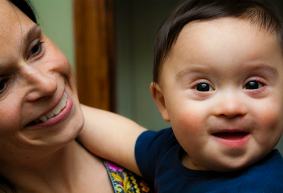
down syndromeIn honor of Disability Employment Awareness Month, the Office of Special Services (OSS) is working to raise awareness of disabilities by offering daily facts and tips about people with disabilities and living with disability. Please take a minute to read and broaden your understanding.

October is Down Syndrome Awareness Month!!!

In every cell in the human body there is a nucleus, where genetic material is stored in genes. Genes carry the codes responsible for all of our inherited traits and are grouped along rod-like structures called chromosomes. Typically, the nucleus of each cell contains 23 pairs of chromosomes, half of which are inherited from each parent. Down syndrome occurs when an individual has a full or partial extra copy of chromosome 21.

This additional genetic material alters the course of development and causes the characteristics associated with Down syndrome. A few of the common physical traits of Down syndrome are low muscle tone, small stature, an upward slant to the eyes, and a single deep crease across the center of the palm – although each person with Down syndrome is a unique individual and may possess these characteristics to different degrees, or not at all.

How Common is Down Syndrome?

One in every 691 babies in the the United States is born with Down syndrome, making Down syndrome the most common genetic condition. Approximately 400,000 Americans have Down syndrome and about 6,000 babies with Down syndrome are born in the United States each year.

The above information is taken from ndss.org.

Disability Employment Awareness Month Tip for Oct. 13: Facts About Dwarfism

In honor of Disability Employment Awareness Month, the Office of Special Services (OSS) is working to raise awareness of disabilities by offering daily facts and tips about people with disabilities and living with disability. Please take a minute to read and broaden your understanding.

October is National Dwarfism Awareness Month
Dwarfism is short stature that results from a genetic or medical condition. Dwarfism is generally defined as an adult height of 4 feet 10 inches (147 centimeters) or less. The average adult height among people with dwarfism is 4 feet (122 cm).

Many different medical conditions cause dwarfism. In general, the disorders are divided into two broad categories:

  • Disproportionate dwarfism. If body size is disproportionate, some parts of the body are small, and others are of average size or above-average size. Disorders causing disproportionate dwarfism inhibit the development of bones.
  • Proportionate dwarfism. A body is proportionately small if all parts of the body are small to the same degree and appear to be proportioned like a body of average stature. Medical conditions present at birth or appearing in early childhood limit overall growth and development.

Causes
Most dwarfism-related conditions are genetic disorders, but the causes of some disorders are unknown. Most occurrences of dwarfism result from a random genetic mutation in either the father’s sperm or the mother’s egg rather than from either parent’s complete genetic makeup.

Achondroplasia
About 80 percent of people with achondroplasia are born to parents of average height. A person with achondroplasia and with two average-size parents received one mutated copy of the gene associated with the disorder and one normal copy of the gene. A person with the disorder may pass along either a mutated or normal copy to his or her own children.

Turner syndrome
Turner syndrome, a condition that affects only girls and women, results when a sex chromosome (the X chromosome) is missing or partially missing. A female inherits an X chromosome from each parent. A girl with Turner syndrome has only one fully functioning copy of the female sex chromosome rather than two.

Growth hormone deficiency
The cause of growth hormone deficiency can sometimes be traced to a genetic mutation or injury, but for most people with the disorder, no cause can be identified.

Other causes
Other causes of dwarfism include other genetic disorders, deficiencies in other hormones or poor nutrition. Sometimes the cause is unknown.

The above information is from the Mayo Clinic.