Disability Employment Awareness Month Tip for Oct. 13: Facts About Dwarfism

In honor of Disability Employment Awareness Month, the Office of Special Services (OSS) is working to raise awareness of disabilities by offering daily facts and tips about people with disabilities and living with disability. Please take a minute to read and broaden your understanding.

October is National Dwarfism Awareness Month
Dwarfism is short stature that results from a genetic or medical condition. Dwarfism is generally defined as an adult height of 4 feet 10 inches (147 centimeters) or less. The average adult height among people with dwarfism is 4 feet (122 cm).

Many different medical conditions cause dwarfism. In general, the disorders are divided into two broad categories:

  • Disproportionate dwarfism. If body size is disproportionate, some parts of the body are small, and others are of average size or above-average size. Disorders causing disproportionate dwarfism inhibit the development of bones.
  • Proportionate dwarfism. A body is proportionately small if all parts of the body are small to the same degree and appear to be proportioned like a body of average stature. Medical conditions present at birth or appearing in early childhood limit overall growth and development.

Causes
Most dwarfism-related conditions are genetic disorders, but the causes of some disorders are unknown. Most occurrences of dwarfism result from a random genetic mutation in either the father’s sperm or the mother’s egg rather than from either parent’s complete genetic makeup.

Achondroplasia
About 80 percent of people with achondroplasia are born to parents of average height. A person with achondroplasia and with two average-size parents received one mutated copy of the gene associated with the disorder and one normal copy of the gene. A person with the disorder may pass along either a mutated or normal copy to his or her own children.

Turner syndrome
Turner syndrome, a condition that affects only girls and women, results when a sex chromosome (the X chromosome) is missing or partially missing. A female inherits an X chromosome from each parent. A girl with Turner syndrome has only one fully functioning copy of the female sex chromosome rather than two.

Growth hormone deficiency
The cause of growth hormone deficiency can sometimes be traced to a genetic mutation or injury, but for most people with the disorder, no cause can be identified.

Other causes
Other causes of dwarfism include other genetic disorders, deficiencies in other hormones or poor nutrition. Sometimes the cause is unknown.

The above information is from the Mayo Clinic.
Disability Employment Awareness Month Tip for Fri., Oct. 9

Screen Shot 2015-10-09 at 11.30.40 AM
In honor of Disability Employment Awareness Month, the Office of Special Services (OSS) is working to raise awareness of disabilities by offering daily facts and tips about people with disabilities and living with disability. Please take a minute to read and broaden your understanding.

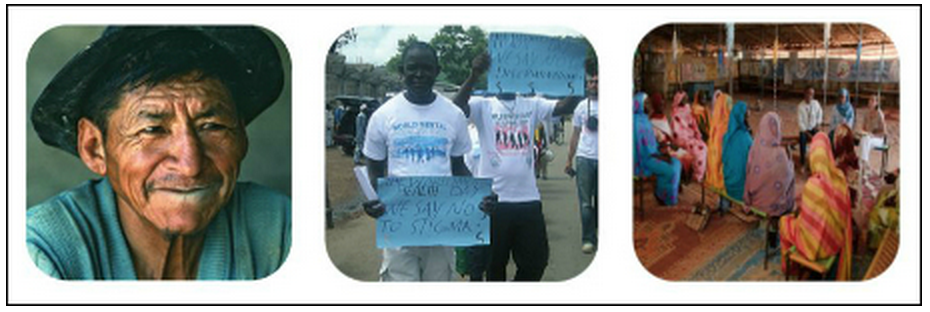
October 10, 2015 is World Mental Health Day!

World Mental Health Day is a yearly event celebrated on 10 October around the world. The day was created by the World Health Organization (WHO) to raise public awareness of mental health issues.

It’s thought that around 154 million people around the world suffer from depression, so it’s likely that you or someone you know will be affected by mental illness during your lifetime. World Mental Health Day aims to get us all talking openly about mental illnesses and the treatment and preventions that are available to us all.

The day will be organized with the help of the World Federation for Mental Health which was founded in 1948 to prevent emotional and mental health disorders and help those who do suffer from them.

This year the theme is “Mental health and older adults” and you can show your support by making a donation at the World Federation for Mental Health website, or by joining in with one of the events organized for the day. Events include community workshops with talks from professionals to give you any advice you might need.

Visit the World Mental Health Day official website for more details and don’t be afraid to talk about your problems this World Mental Health Day.

Living with a Mental Health Condition

Living with a Mental Health Condition If you have a mental health condition, you’re not alone. 1 in 5 American adults experience some form of mental illness in any given year. And across the population, 1 in every 20 adults is living with a serious mental health condition such as schizophrenia, bipolar disorder or long-term recurring major depression.

As with other serious illnesses, mental illness is not your fault or that of the people around you, but widespread misunderstandings about mental illness remain. Many people don’t seek treatment, or remain unaware that their symptoms could be connected to a mental health condition. People may expect a person with serious mental illness to look visibly different from others, and they may tell someone who doesn’t “look ill” to “get over it” through willpower. These misperceptions add to the challenges of living with a mental health condition. Every year people overcome the challenges of mental illness to do the things they enjoy. Through developing and following a treatment plan, you can dramatically reduce many of your symptoms.

People with mental health conditions can and do pursue higher education, succeed in their careers, make friends and have relationships. Mental illness can slow us down but we don’t need to let it stop us. For more information on living with mental illness, click here.

Disability Awareness Month Tip for Thurs., Oct. 8: World Sight Day

Screen Shot 2015-10-07 at 3.41.26 PM
In honor of Disability Employment Awareness Month, the Office of Special Services (OSS) is working to raise awareness of disabilities by offering daily facts and tips about people with disabilities and living with disability. Please take a minute to read and broaden your understanding.

Today’s topic is: October 8, 2015 is World Sight Day. This year’s call to action:

World Sight Day is an important advocacy and communications opportunity for the eye health community. It is a great time to engage with a wider audience – a patient’s family, those who seldom get an eye exam, diabetics – and showcase why eye health needs everybody’s attention.

Eye care for all: This year, The International Agency for the Prevention of Blindness (IAPB) urges you to focus on everybody who needs eye care services – everybody. Think of all the groups of people who need eye care – especially the most vulnerable or the ones most in need. What can we do to bring eye care to them all? How can we ensure that access to eye care is not limited by gender or geographic location, or even financial status? Do remember, ‘Eye Health’ also includes rehabilitation and assistive services for those with irreversible vision loss.

This World Sight Day, let’s do something that will draw attention to the great unmet need in eye care services.

On World Sight Day, IAPB members work together to:

1. Raise public awareness of blindness & vision impairment as major international public health issues
2. Influence Governments/Ministers of Health to participate in and designate funds for national blindness prevention programs
3. Educate target audiences about blindness prevention,  about VISION 2020 and to generate support for VISION 2020 program activities

International Key Messages:

1. Approximately 285 million people worldwide live with low vision and blindness
2. Of these, 39 million people are blind and 246 million have moderate or severe visual impairment
3. 90% of blind people live in low-income countries
4. Yet 80% of visual impairment is avoidable – i.e. readily treatable and/or preventable
5. Restorations of sight, and blindness prevention strategies are among the most cost-effective interventions in health care
6. The number of people blind from infectious causes has greatly reduced in the past 20 years
7. An estimated 19 million children are visually impaired
8. About 65 % of all people who are visually impaired are aged 50 and older, while this age group comprises only 20% of the world’s population
9. Increasing elderly populations in many countries mean that more people will be at risk of age-related visual impairment.

The above information was taken from the website of the IAPB. For more information about World Sight Day, click here.

Disability Awareness Month Tip for Tues., Oct. 6

In honor of Disability Employment Awareness Month, the Office of Special Services (OSS) is working to raise awareness of disabilities by offering daily facts and tips about people with disabilities and living with disability. Please take a minute to read each day’s fact and broaden your understanding.

Today’s topic is: Facts About Deafness

Here is some general information to know about the Deaf:

  • There are approximately 22-28 million Deaf and Hard of Hearing people in the United States.
  • Deaf people, for the most part, prefer to be called “deaf.”
  • Hard of Hearing individuals have significant hearing loss, but they still have enough residual hearing to be able, with or without amplification, to understand a large majority of human speech.
  • Even the most experienced and skilled lip readers can only understand about 30% of English speech. Most words are ambiguous and unidentifiable on the lips. Also, many different sounds look the same on the lips.
  • Sign language is not universal. American Sign Language is the language used by most Deaf individuals living in the United States and a large part of Canada. There are almost as many sign languages as there are spoken languages in the world.
  • 90% of Deaf children are born to Hearing parents.
  • The Deaf work in fields such as architecture, clergy, corporations, education, entertainment, financial institutions, government, law and law enforcement, medicine, science, and technology.
  • Not all Deaf individuals use sign language as their primary mode of communication. If a deaf person is educated in an oral environment they live their lives and function in the “hearing world” without the use of sign language. Late deafened adults often choose to continue communicating oral-aurally and lip/speech read, using what residual hearing they have left.

The above information and more can be found at Beyond the Words, Inc.

The OSS on campus serves students with disabilities and also promotes disability awareness through the provision of disability related information. Please contact OSS directly if you have questions (oss@shoreline.edu, (206) 546-4545, FOSS building, 5226).

Disability History Exhibit on Display Now in the Library Through Fri., May 15

Shoreline’s Office of Special Services (OSS)
and the Library are proud to bring you
Disability History Exhibit
(This week only May 11-15, 2015).

disabilities 2

The Disability History Exhibit is a 22-panel collage that traces 3,000 years of seldom-told history. From antiquity to the present, the exhibit brings viewers through an illustrated timeline that shows society’s attitudes and how they affect the lives of people with disabilities. Viewers experience powerful feelings as they notice similarities between ancient practices and modern stereotypes. The exhibit is accessible at many levels, striking a balance between easily grasped information and a comprehensive history viewed from multiple angles. The website, with accessible content of the displays, can be found here.

This display was brought to campus by the Library and OSS, which houses Disability Services for Students (SSD). Please feel free to contact us if you have any questions. We are located in the FOSS Building room 5226, and can be reached via phone at 206-546-4545 or via email at oss@shoreline.edu. We hope you have an opportunity to go see this beautiful, touching and shocking display.

Please send comments or questions about the exhibit to kcook@shoreline.edu. Thank you for your interest in the Disability History Exhibit.