Shoreline Community College Receives $697,300 Grant to Launch Veteran Success Through Education Program 

Shoreline Community College has been awarded a $697,300 grant through the Supporting Student Veterans and Their Families initiative, funded by the King County Veterans, Seniors and Human Services Levy. In partnership with the nonprofit Operation Military Family, Shoreline will launch the Veteran Success Through Education program, a two-year pilot effort to provide holistic support for veterans and their families, particularly those from marginalized communities. 

The grant, which spans from July 1, 2025, through June 30, 2027, will support culturally responsive case management, academic and financial assistance, and comprehensive wraparound services for eligible students. 

“This is an opportunity to serve veterans who may be navigating the complexities of higher education without access to, or who have exceeded traditional VA benefits,” said Derek Levy, Dean of Student Support & Success at Shoreline. “We’re excited to expand the services and supports we can offer to our veteran student community, both current and prospective, providing access and wraparound support in collaboration with Operation Military Family through the support of the King County Veterans, Seniors and Human Services Levy.” 

The Veteran Success Through Education program will focus on serving veterans from underrepresented communities, including BIPOC, LGBTQ+ individuals, formerly incarcerated veterans, and those who have exhausted or are not eligible for VA benefits. Operation Military Family will provide individualized case management, both remotely and on campus, and help connect Shoreline with veterans in need through an established network across the region. 

Funding from the grant will enable Shoreline to assist with tuition, incidental expenses, and housing assistance for eligible students based on need. Participants will also have full access to Shoreline’s robust student support services, including dedicated Veterans services and academic advising. 

“Through the Veteran Success Through Education program, we are honored to support those who have served our country, especially veterans from historically underserved communities, by providing the resources, guidance, and community they need to thrive in their academic and personal journeys,” said Ryan Aiello, Shoreline’s Vice President of Student Affairs. 

The grant builds on Shoreline’s growing efforts to provide inclusive, equitable access to education and serves as a bridge for those who may be seeking a new path after military service. 

Joshua Salois, Program Specialist II who works primarily with Shoreline’s Veterans population, had this to say about the grant.  “I’m excited for us to have the opportunity to support even more student Veterans and family members; especially folks coming from marginalized and often vulnerable populations. Even something seemingly small, like getting a professional certificate, can be so empowering and transformative, so for our program to have more ability to give that chance to those who may not have otherwise had it is just really amazing.”  

As a pilot program, Veteran Success Through Education will run through June 2027 with the potential to inform and expand future support for veteran students across King County. 
Press Release: Arizona State University and Shoreline Community College Partner to Launch Seamless Transfer Pathways Through MyPath2ASU

Shoreline Community College is pleased to announce a new alliance with Arizona State University to provide students with a seamless transfer experience with the MyPath2ASU® program. MyPath2ASUallows students to take the steps needed at the start of their college experience to successfully plan their transfer to ASU, ensuring a smooth transition process and student success.

 “As a Sun Devil, I am very excited about this partnership with ASU.  From first-hand experience I am very excited about all of the engaging academic opportunities and culturally rich experiences our students will have at ASU,” said Dr. Jack Kahn, President of Shoreline Community College.

MyPath2ASU is a tool designed to guide students through the transfer process providing clear pathways, personalized guidance, and support. The program helps students maximize their credits and minimize the time it takes to complete their degree.

Samira Pardanani, Associate VP for International Education added, “We are thrilled to partner with Arizona State University, giving Shoreline graduates another excellent transfer opportunity to a top university. This partnership highlights our commitment to providing high-quality, globally recognized pathways for students to reach their academic and professional goals!”

Through this new partnership, students using MyPath2ASU will find their transfer experience simplified. Key benefits of the program include:

  • Personalized guidance through over 400 course-by-course guided pathways to ASU online and in-person degree programs, ensuring that Shoreline Community College coursework aligns with their desired ASU major and minimizes credit loss.
  • Personalized guidance through over 400 course-by-course guided pathways to ASU online and in-person degree programs, ensuring that Shoreline Community College coursework aligns with their desired ASU major and minimizes credit loss.
  • Guaranteed general admission to ASU and admission into MyPath2ASU major choice if all requirements are satisfied.
  • Self-service, degree progress tracking to help students stay informed about their academic progress.
  • A connected experience with ASU through personalized communications that support academic growth and community engagement.

Some of the in-demand pathways offered through the new partnership include:

To see how the MyPath2ASU program works and to get started, click here.

This is an image of student Susie May at graduation.

Student Success 

After Susy May completed her Transfer Associate Degree with a certificate in Project Management, she decided to continue her education through ASU Online with the help of MyPath2ASU to study Organizational Leadership (Project Management), BA. Her decision was motivated by ASU Online’s reputation and wide variety of online programs available. 

Press Release: Donors Bridge FAFSA Gap for Students at Shoreline Community College

Donors Bridge FAFSA Gap for Students at Shoreline Community College 

Shoreline, WA – [October 17, 2024] – The U.S. Department of Education promised a streamlined financial aid process for students this year by reimagining the Free Application for Federal Student Aid (FAFSA). However, instead of making things easier, the rollout of the new form has been riddled with delays and technical issues. Released months behind schedule, the updated FAFSA left colleges scrambling to process aid packages. Errors in the form nearly cost students $1.8 billion in federal aid, and even after a fix was implemented, further delays ensued. Additionally, a technical glitch prevented many non-citizens and their children from completing the application, adding to the frustration. 

These delays have disproportionately impacted low-income students who rely on federal aid to meet essential needs such as rent, childcare, and food. Without timely access to these funds, many students faced frustration and financial insecurity, threatening their ability to remain in school. 

In response, this summer the Shoreline Community College Foundation (SCCF), supported by generous donors, established a special emergency fund to bridge the gap between when students were awarded aid and when they received the funds. The Shoreline Community College (Shoreline) Financial Aid Office administered these funds to ensure students could stay enrolled despite the delays. 

“Research from 2024 highlights that financial barriers remain one of the leading causes of student attrition,” said Ryan Aiello, Vice President of Student Services at Shoreline Community College. “A recent survey conducted by Western Washington University and the Washington State Achievement Council found that nearly 50% of students at two-year colleges have experienced food or housing insecurity.” Using Donor funds in this way alleviated financial stress on low-income students, keeping these students in school, giving them a better chance to complete their degree or certificate training, and move into living-wage jobs. 

Wendy Coates, Executive Director of the SCCF, praised the donors whose contributions made this initiative possible: “This was such a unique situation. We knew the FAFSA rollout was delayed so we were able to find a solution to bridge the gap for our most financially fragile students before they were negatively impacted.” Through this program, 111 students received stipends ranging from $500 to $1,000 totaling $60,000 overall to cover critical living expenses, including rent, food, childcare, and transportation. 

“I am deeply grateful to the donors to the SCCF who make emergency programs like this possible.,” Coates added. Every dollar not only impacts individual students but strengthens the entire Shoreline community.” 

Aiello also underscored the emotional and mental health benefits of the emergency support: “This donor-backed initiative provided immediate relief for over 100 students, alleviating their financial stress as they prepared for the academic term. Beyond addressing physical needs, this assistance also contributed to students’ mental wellbeing by reducing the overwhelming anxiety that often accompanies financial uncertainty.” 

“I am incredibly proud of our financial aid staff for their incredible dedication to our students at this time and to our Foundation and donors who really stepped up to serve students during this national federal aid crisis. It really demonstrates the commitment our community has for student success,” said Shoreline President Dr. Jack Kahn about this important initiative. 

If you’d like to learn more about the work the Shoreline Community College Foundation does, or if you are interested by playing a positive role in the lives of our students by becoming a donor, please visit https://www.shoreline.edu/foundation/ or contact Wendy Coates at wcoates@shoreline.edu 

Press Release: Shoreline Community College Secures $500K Grant to Enhance Equity in STEM Education 

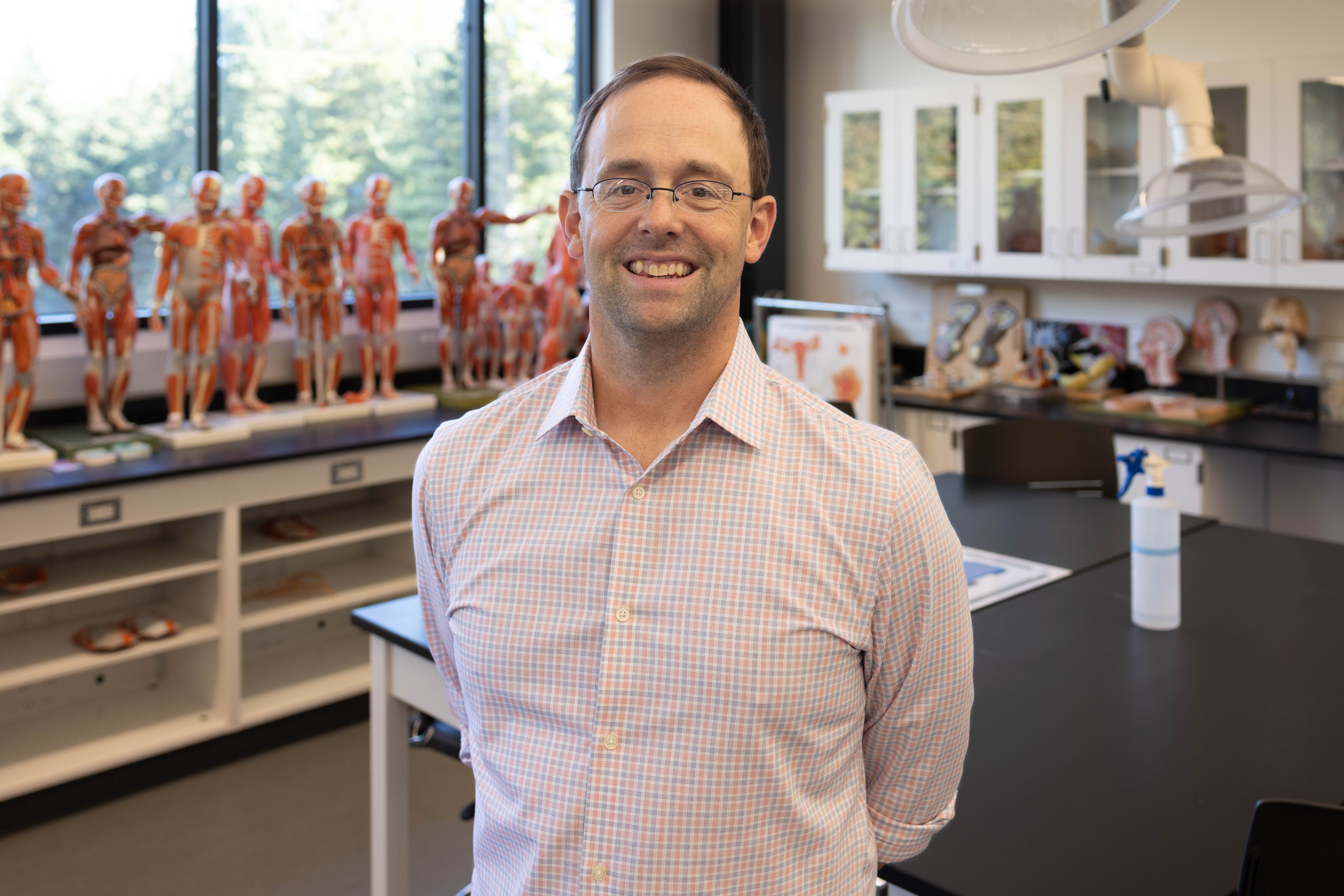
Dr. Ben Wiggins stands in Shoreline Community College's new science lab

Shoreline Community College (Shoreline) has been awarded a prestigious $500,000 grant from the National Science Foundation (NSF) as part of their inaugural Innovation in Two-Year College STEM Education (ITYC) program. This significant funding will support a groundbreaking project led by Professor Ben Wiggins, aimed at transforming how science exams are designed and administered in community college classrooms across the country. 

The Pre-Released Exam Strategy Assessment Research (PRExSAR) project is one of 27 selected for funding through the NSF’s ITYC program, which awarded a total of $14.5 million in grants in its first year. This initiative seeks to advance innovative, evidence-based practices that enhance STEM education at two-year colleges nationwide. 

Dr. Wiggins, a biology professor at Shoreline leads the project, which focuses on making science exams more equitable and effective for students. Partnering with professors from community colleges nationwide, the research team will explore how different exam strategies impact student performance and engagement. This innovative approach allows students to see the exam format and key concepts beforehand, fostering deeper learning and reducing test anxiety. 

“For years, I’ve seen students struggle with traditional science exams, which can feel like a barrier to their success,” Wiggins explains. “This project allows us to explore how small changes to exam design can make a big difference, without adding extra burden on professors. We want to empower instructors with better tools, so they can help students thrive.” 

In collaboration with Professor Greg Crowther of Everett Community College, the project will interview students and faculty from around the country, conduct experiments, and publish research that identifies the most effective and sustainable exam methods. “Five years ago, I stumbled across a blog post in which Ben outlined his Public Exam system. I was simultaneously impressed with Ben’s ideas and inspired to adapt them to my own classroom concerns and context, which led to the Test Question Template (TQT) framework. I’m delighted that our partnership and our work has now progressed to the point of attracting significant support from the NSF,” said Crowther about the project. 

Findings from the study will provide essential insights into how to create assessments that foster greater student success, particularly in STEM fields. 

“The need for a robust STEM workforce has never been greater,” Wiggins notes. “But outdated teaching methods and brutal exams are driving students away, often reinforcing the patterns of who has historically been allowed to succeed in science. This grant gives us a chance to change that narrative and bring real solutions to the table.” 

The NSF’s ITYC program is part of a larger effort to expand STEM opportunities for community college students, a crucial demographic for the nation’s future scientists, engineers, and technicians. The program seeks to address the unique challenges faced by two-year institutions and ensure that students from diverse backgrounds have equitable access to STEM education. 

Shoreline’s Vice President of Instruction, Dr Ben Weng emphasizes the importance of this reach: “Professor Wiggins’ project pioneers equitable assessment methods to elevate STEM teaching and learning. This innovative approach seeks to engage our diverse student body, particularly the traditionally underrepresented groups in STEM. The initiative aligns with Shoreline’s institutional goals for inclusive excellence in education. We wish him great success! 

As Shoreline Community College leads this innovative research, the PRExSAR project has the potential to create lasting changes in how exams are designed and administered across the country, helping students succeed in their STEM education and beyond. 

Press Release- Education Within Reach: Shoreline Community College Launches Innovative Pilot Program to Help Homeless Students 

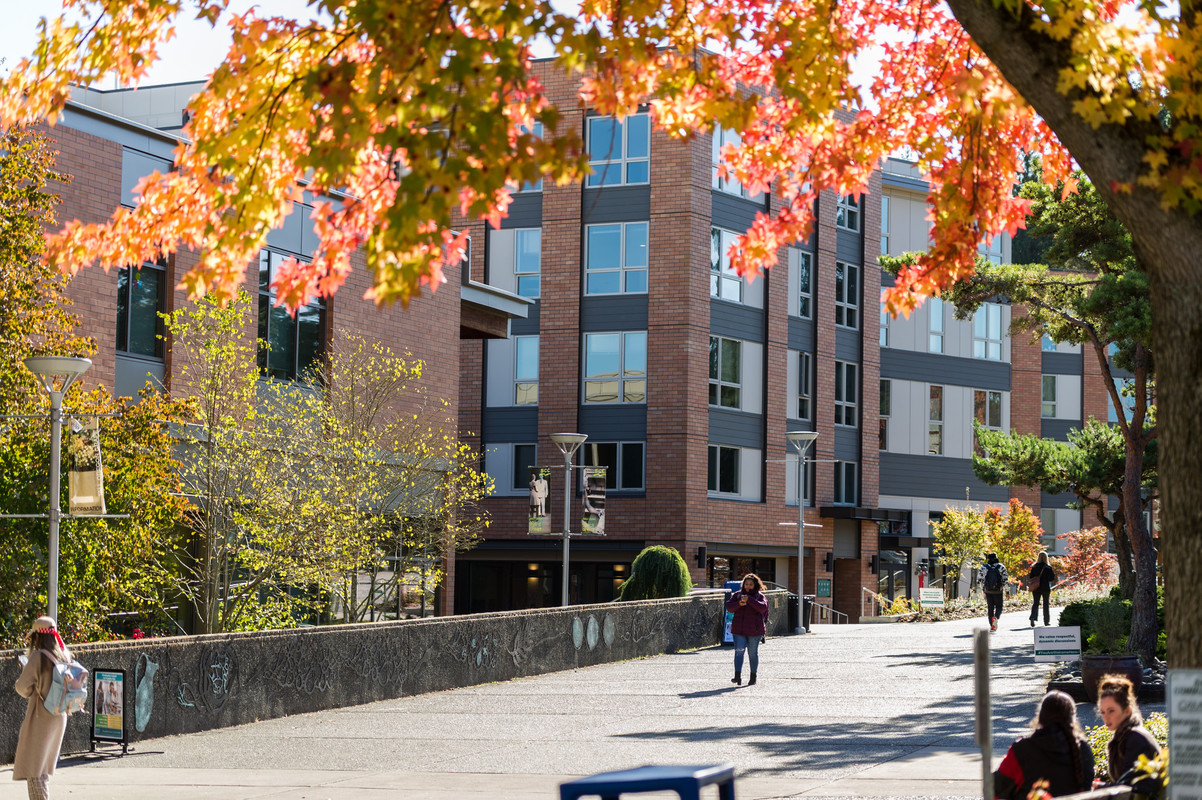
Shoreline Community Residence Hall exterior shot in the fall

Shoreline Community College (Shoreline) is tackling the challenge of students experiencing homelessness head-on with the launch of a groundbreaking pilot program. Partnering with King County Housing programs and Best Starts for Kids, the initiative provides students experiencing homelessness who are enrolled in the Center for Education and Career Opportunities (CECO) program with stable on-campus housing, integrated directly with academic and employment support services. 

Breaking Down Barriers to Success 

Many students struggle to juggle educational pursuits with the instability of experiencing homelessness. The constant stress of finding shelter makes it difficult to focus on studies and maintain enrollment. Recognizing this critical barrier, CECO designed this pilot program to empower students experiencing homelessness to achieve their academic and career goals. 

What is CECO? 

CECO serves youth aged 16-21 who have dropped out of high school, assisting them in obtaining their secondary credentials and supporting them through their post-secondary education (gaining their certification, associate’s degree, career) tuition free. Despite the program’s success, certain student groups, particularly those facing severe mental health challenges or experiencing homelessness, have historically struggled to persist. This new partnership is designed to address these barriers directly. 

“We have discovered a significant number of students facing housing instability,” Guru Dorje, Director of CECO at Shoreline explained. “Our goal is to ensure these students not only achieve their educational credentials but as one of the benefits of this they are able to secure permanent housing, breaking the cycle of homelessness.” 

Addressing Critical Needs Through Housing and Support 

This new initiative was originally slated to start in Summer Quarter 2024 but began ahead of schedule due to urgent student needs. The program aims to house students on campus for eight quarters, integrating housing with comprehensive educational and employment support. Currently, four students are benefiting from this program, with plans to expand to twelve students by Spring 2025. 

The program is rooted in the belief that “stable housing, coupled with a dedicated case manager who supports both educational and employment goals, is crucial for student success,” said Dorje. “Other programs typically separate housing and educational support, but our approach integrates them, providing a holistic support system.” 

The program’s early results are promising. All three students currently enrolled in the pilot are on track to earn their high school equivalency diplomas and seamlessly transition to post-secondary education. 

“Our ultimate aim is to see these students complete their education, transfer if appropriate, secure stable employment, and maintain permanent housing, said Dr. Jack Kahn, President of Shoreline Community College. “Our hope is to see positive outcomes with our initial students and expand this program and work with others to do the same” 

Looking Ahead 

Partnering with King County Housing programs and the Shoreline Community College Foundation the initiative provides students experiencing homelessness who are enrolled in the CECO program with stable on-campus housing, integrated directly with academic and employment support services. Initial 2-year grant funding for the program is being provided by King County and generous donors who give through the Shoreline Community College Foundation. Long-term funding to ensure the program’s continued success and expansion is needed. Donors and funders interested in learning more can reach out to the Shoreline Community College Foundation (sccfoundation@shoreline.edu).

This initiative is the first of its kind, combining housing with educational and employment support to a single point of contact in a community college setting. The insights gained from this pilot will inform future strategies to address homelessness among students, with the hope of expanding similar programs across other community and technical colleges.