
Reminder: Tell Your Students! Choosing a Major or Career Path Workshop Tues., Oct. 27

Job & Career Workshops - FALL FLYER 2015 jpeg
As part of our quest to help students succeed, please tell your students about the second installation of our Job and Career Success Series: “Choosing a Major or Career Path” on Tues., Oct. 27 from 12:30-1:30 p.m. in the PUB Quiet Dining Room.

In this workshop, students will explore interests, strengths, and values and learn how those things connect to deciding a major and/or career pathway that is right for them. Shoreline Community College Career Counselors will provide strategies for career exploration and share information about resources to help select a pathway that fits each individual.
Mid-Cycle Accreditation Visit Oct. 26 + 27

An evaluation team will be visiting Shoreline on behalf of the Northwest Commission on Colleges and Universities October 26 and 27. Shoreline is in Year 3 of a seven-year accreditation cycle. This mid-cycle evaluation focuses on how Shoreline assesses mission fulfillment, particularly its ongoing assessment of student learning outcomes. The evaluators will not make any determination or recommendations related to Shoreline’s accreditation but will provide extensive formative feedback in preparation for the comprehensive evaluation in Year 7.

Disability Awareness Month Tip for Oct. 26: Facts About Anxiety

anxiety
In honor of Disability Employment Awareness Month, the Office of Special Services (OSS) is working to raise awareness of disabilities by offering daily facts and tips about people with disabilities and living with disability. Please take a minute to read and broaden your understanding.

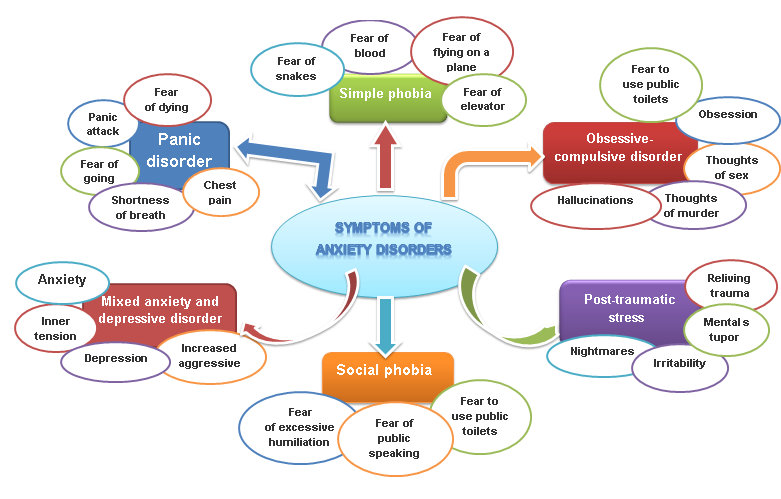
What Are the Types of Anxiety Disorders?

There are several recognized types of anxiety disorders, including:

  • Panic disorder: People with this condition have feelings of terror that strike suddenly and repeatedly with no warning. Other symptoms of a panic attack include sweating, chest pain, palpitations (unusually strong or irregular heartbeats), and a feeling of choking, which may make the person feel like he or she is having a heart attack or “going crazy.”
  • Social anxiety disorder: Also called social phobia, social anxiety disorder involves overwhelming worry and self-consciousness about everyday social situations. The worry often centers on a fear of being judged by others, or behaving in a way that might cause embarrassment or lead to ridicule.
  • Specific phobias: A specific phobia is an intense fear of a specific object or situation, such as snakes, heights, or flying. The level of fear is usually inappropriate to the situation and may cause the person to avoid common, everyday situations.
  • Generalized anxiety disorder: This disorder involves excessive, unrealistic worry and tension, even if there is little or nothing to provoke the anxiety.

What Are the Symptoms of an Anxiety Disorder?

Symptoms vary depending on the type of anxiety disorder, but general symptoms include:

  • Feelings of panic, fear, and uneasiness
  • Problems sleeping
  • Cold or sweaty hands and/or feet
  • Shortness of breath
  • Heart palpitations
  • An inability to be still and calm
  • Dry mouth
  • Numbness or tingling in the hands or feet
  • Nausea
  • Muscle tension
  • Dizziness

What Causes Anxiety Disorders?

The exact cause of anxiety disorders is unknown; but anxiety disorders — like other forms of mental illness — are not the result of personal weakness, a character flaw, or poor upbringing. As scientists continue their research on mental illness, it is becoming clear that many of these disorders are caused by a combination of factors, including changes in the brain and environmental stress.

Like other brain illnesses, anxiety disorders may be caused by problems in the functioning of brain circuits that regulate fear and other emotions. Studies have shown that severe or long-lasting stress can change the way nerve cells within these circuits transmit information from one region of the brain to another. Other studies have shown that people with certain anxiety disorders have changes in certain brain structures that control memories linked with strong emotions. In addition, studies have shown that anxiety disorders run in families, which means that they can at least partly be inherited from one or both parents, like the risk for heart disease or cancer. Moreover, certain environmental factors — such as a trauma or significant event — may trigger an anxiety disorder in people who have an inherited susceptibility to developing the disorder.

Anxiety disorders affect millions of adult Americans. Most anxiety disorders begin in childhood, adolescence, and early adulthood. They occur slightly more often in women than in men, and occur with equal frequency in whites, African-Americans, and Hispanics.

How Are Anxiety Disorders Diagnosed?

If symptoms of an anxiety disorder are present, the doctor will begin an evaluation by asking you questions about your medical history and performing a physical exam. Although there are no lab tests to specifically diagnose anxiety disorders, the doctor may use various tests to look for physical illness as the cause of the symptoms.

If no physical illness is found, you may be referred to a psychiatrist, psychologist, or another mental health professional who is specially trained to diagnose and treat mental illnesses. Psychiatrists and psychologists use specially designed interview and assessment tools to evaluate a person for an anxiety disorder.

The doctor bases his or her diagnosis on the patient’s report of the intensity and duration of symptoms — including any problems with daily functioning caused by the symptoms — and the doctor’s observation of the patient’s attitude and behavior. The doctor then determines if the patient’s symptoms and degree of dysfunction indicate a specific anxiety disorder.

How Are Anxiety Disorders Treated?

Fortunately, much progress has been made in the last two decades in the treatment of people with mental illnesses, including anxiety disorders. Although the exact treatment approach depends on the type of disorder, one or a combination of the following therapies may be used for most anxiety disorders:

  • Medication: Drugs used to reduce the symptoms of anxiety disorders include anti-depressants and anxiety-reducing drugs.
  • Psychotherapy: Psychotherapy (a type of counseling) addresses the emotional response to mental illness. It is a process in which trained mental health professionals help people by talking through strategies for understanding and dealing with their disorder.
  • Cognitive-behavioral therapy: This is a particular type of psychotherapy in which the person learns to recognize and change thought patterns and behaviors that lead to troublesome feelings.
  • Dietary and lifestyle changes.
  • Relaxation therapy.

Can Anxiety Disorders Be Prevented?

Anxiety disorders cannot be prevented; however, there are some things you can do to control or lessen symptoms:

  • Stop or reduce consumption of products that contain caffeine, such as coffee, tea, cola, energy drinks, and chocolate.
  • Ask your doctor or pharmacist before taking any over-the-counter medicines or herbal remedies. Many contain chemicals that can increase anxiety symptoms.
  • Seek counseling and support if you start to regularly feel anxious with no apparent cause.

The above information and more can be found here, here and here.

Shoreline Volleyball Battles Bellevue for 1st at Home, Fri. Oct. 23

vball_strike
This Fri., Oct. 23 head over to the main gym and cheer on the women’s volleyball team as they take on Bellevue at home from 7-9 p.m.

This should be an exciting match, because the Phins – who are currently ranked #5 in the latest NWAC Alaska Airlines Coaches Poll – are battling Bellevue for 1st place in the North Region!

If you haven’t caught a game this year make sure this is the first one you attend! Come support the Phins as they try to claim 1st! #GoPhins #PhinNation

Announcing Two New (ish) Advisors: Audrey Fischer and Joyce Fagel

IMG_4412
Audrey Fischer
began her role as a Faculty Academic Advisor here at Shoreline in July 2015. Audrey has a M.A. in Policy and Organizational Leadership Studies from the Stanford Graduate School of Education and a B.A. in Psychology and International Relations from Gonzaga University. Before coming to Shoreline, she served as an academic advisor for transfer students at Bellevue College where she led the campus-wide Advising Committee and taught First Year Experience classes for domestic and international students. Audrey also worked as a middle school teacher at Todd County on the Rosebud Reservation in Mission, South Dakota for three years. While there, she worked on math and social studies curriculum development for the district and coached 7
th grade volleyball.

Audrey enjoys spending time with her parents in Salem, Oregon and with her two younger sisters (Rachel in Seattle and Maggie in San Diego). In her free time she loves to hike all over the Northwest, do crossword puzzles in pen, block shots in pick-up basketball, and play trumpet in an all-teacher rock band.


joyce
Joyce Fagel
has been in a shared advising position with Shoreline Community College and the University of Washington for the past 17 years, in recent years spending 50% time on each campus. Well, now she is working for Shoreline Community College full-time, finally. She is very excited to be part of the current growth of advising and student support staff and programs on campus.

As a general academic advisor, she will work with professional/technical and transfer students to get started in college, understand the college system, and help plan how academic and career goals can be attained. She will continue to be a resource on U of Washington information as well as advising for health, science, engineering and related programs.

Joyce was once a pre-medical school student, then studied one year of physical therapy before she settled on a psychology major at Augsburg College in Minneapolis. After that, she completed a Master’s Degree in Counseling and Student Personnel Psychology at the University of Minnesota. Now, she has been advising pre-health and science students for many years, so she is able to combine all her interests!

Joyce was born and grew up in the Netherlands and came to the United States as an international college student. At that time, she met a young man, an immigrant student from Hong Kong, and they have been partners ever since. That is now a long time ago; you can make some guesses as to how long. Some of you saw Joyce years ago when she brought her oldest with her to the Parent-Child Center. Her son is now a second-year student at the U of Washington! Her daughter is an 11th grader at Ingraham High School. Joyce also has two cats, Tabby and Java.

Joyce lives about a mile from campus in North Seattle, and she likes to walk to campus. She also enjoys Shoreline’s yoga and Zumba classes. Other favorite activities are reading and knitting. Joyce is on the Community Read committee and encourages everyone to read and participate with this year’s amazing book: Octavia’s Brood: Science Fiction Stories from Social Justice Activists.