Dear Colleague,
The times in which we live require all of us to understand how to uphold and live into our Community Standard, particularly as it relates to constitutional protections guaranteed by the First Amendment. There have been many conversations across campus asking for more concrete ways to proceed. In this email, I wanted to bring some focus, and hopefully, understanding to what we can do as a college community.
As a public community college, our identity is that of both a governmental agency and a member of the academy. As such, we are called both legally and, I believe, ethically, to be open and respectful to all who come to our campus. Even when a viewpoint is in stark contrast to the College’s stated viewpoint and values, the First Amendment prohibits the College from being able to silence or forcibly remove any person from campus unless the behaviors are harassing, threatening violence, or someone’s physical safety. The key word is actions. Although we do not subscribe to hateful and disrespectful language as a College, individuals do not lose their constitutional freedoms when they come to our campus. With that said, creating a welcoming environment does not mean we agree with differing viewpoints such as racist and white nationalist speech. This speech goes to the core of why free speech on a college campus is a difficult issue.
As an individual, our Community Standard does not mean you have to agree with a viewpoint you find deplorable. The College administration and I might also consider the offensive viewpoint to be deplorable. But if the offensive viewpoint being expressed is protected speech, then our College does not have legal authority to silence, remove, or discipline the speaker merely because we don’t like the message. What we can do is to counter the speech with more speech, and we can affirm what our values are. If the speaker with an offensive viewpoint crosses the line of protected speech and takes actions against others that are harassing or threatening a person’s physical safety, then the College can take measures to deal with the harasser and protect the person being harassed.
I grew up in the segregated South and felt the diminishing sting of discrimination. At that time, the unpopular views were from the civil rights movement. Expressive ideas such as desegregation, integration, and equal rights were considered hate speech and un-American at that time, and many considered such viewpoints to be offensive. What allowed the civil rights movement to grow was because its speech was protected. This allowed these democratic ideals to take hold and become accepted as part of our American values.
I have been asked to describe what our Community Standard looks like in action and what we can do. First of all, the First Amendment allows for freedom of speech and freedom of expression, which includes expression on clothing. In the late 1960s, many people were offended when students wore black armbands at school to oppose the Vietnam War, but our Supreme Court protected that expression. In the case of a person who was reported to be wearing a white supremacy jacket on our campus, it is correct this person has a constitutional right to wear his jacket on campus. This doesn’t mean we agree with the ideology expressed. What we do uphold is the person’s rights to express opinions through speech and symbols, and we can express our disagreement with his viewpoint.
Upholding constitutionally protected rights is not always easy or popular. It means we may disagree with differing viewpoints. There is a big difference between allowing the protected viewpoint to be expressed and supporting the point of view as a College. There is not always a bright line where protected offensive speech becomes harassment or discrimination. If a person takes an action that makes you feel harassed, discriminated against, or threatened, you are encouraged to contact our Safety and Security Department to initiate an investigation, and if appropriate, action will be taken. If you have an incident that you believe needs to be reported, you can follow the steps below:
· Alert Safety and Security (or law enforcement if needed)
· Report the incident to the Community Standard email box we have established: communitystandard@shoreline.edu
· Share the incident with your supervisor as needed
The more we understand what’s going on on campus the better we can respond with a collective action.
Recently, I met with faculty and administrators to discuss how to create the capacity to better understand First Amendment rights, academic freedom, and our Community Standard. As a result of that meeting, we will be creating a series of conversation to help us better understand our constitutional and academic freedom rights so we can respond to intolerance in ways that align with what we value at Shoreline.
Respectfully,
Cheryl
Cheryl Roberts, Ed.D.
President

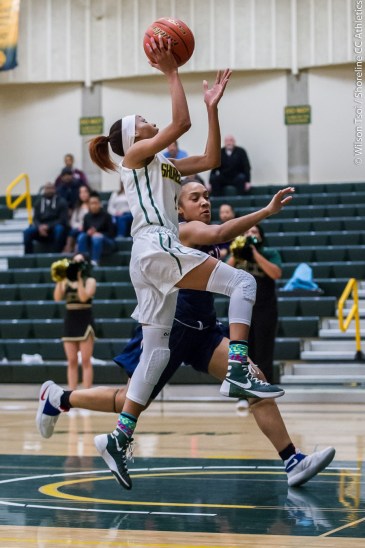 Men’s and Women’s Basketball host Everett Community College on Wed., March 1. This is the last home game of the season and we will be celebrating the Sophomores in their final home games as Shoreline Dolphins. The Women will tip-off at 5:30 p.m., with the Men following at 7:30 p.m.
 Day at a Glance
Recent Comments