Dear Colleague,
It is hard to believe we are already at the end of the 2020-21 year! It has certainly been a year none of us could have imagined and, as a College, we’ve weathered so many challenges together. As always, I am so grateful for your continued dedication to our students and for rising above so many unanticipated obstacles. As this is my last quarterly message to you as President, it is bittersweet to think about concluding my time here at Shoreline. What I will take with me when I leave, more than anything else, is the knowledge that there are so many caring individuals at Shoreline who want to guide our students to success. Here are some important updates I want to share with you as we begin to close out spring quarter.
COVID-19 Update
With up to 25% of our fall classes having an in-person component, we continue to assess and gather input on potentially increasing some support services on campus. And while the College has not yet made a determination about a vaccination requirement for students or employees, we continue to enforce mask wearing, social distancing, and cleaning practices for all on-campus activities. Summer and fall hybrid class sizes have been adjusted to ensure appropriate social distancing and safety protocols, and the College is following Centers for Disease Control & Prevention (CDC) guidelines regarding appropriate building air filtration. Any updates to this information will be shared widely with the campus community as it becomes available.
STRATEGIC PLAN GOAL 1: We attract students and community learners and ensure successful attainment of their goals through our programs, services, and teaching and learning environments.
Student Enrollment Update
After a full year of predominantly remote learning, Shoreline’s total annual enrollment was down 8.3% compared to the previous year (5086 annual FTE compared to 4663). To give this number context, the entire system of community and technical colleges in Washington was down 14% in enrollment overall (as of Winter 2021). International enrollment will end the year 18% down (930 to 758), compared to the system which was down 37% as of Winter 2021. State-supported FTE was down 6.4% (3558 to 3332) compared to –15% system-wide. Running Start enrollment continued to increase (by 6.2%, 279 to 307 annual FTE), compared to flat enrollment state-wide.
Accreditation Work Continues
On February 12, 2021, the Northwest Commission on Colleges and Universities (NWCCU) reaffirmed Shoreline’s accreditation. As reported immediately after the visit in fall, Shoreline has received five recommendations to address during the current accreditation cycle; the reaffirmation letter specified that two of these recommendations, both related to assessment, are “out of compliance,” meaning that Shoreline has two years to show substantial progress. The Commission requested an ad hoc report in Fall 2021 to update on the College’s transfer of credit policy and another ad hoc report in Spring 2022 to address the two recommendations about assessment. Due to the reduced capacity for assessment because of ctcLink, Shoreline has requested and was granted an extension on the second ad hoc report to Fall of 2022. If you would like to contribute to Shoreline’s efforts to address recommendations currently out of compliance, please consider getting involved in the general education outcomes revision or contact Bayta Maring (bmaring@shoreline.edu) about paid opportunities for faculty to participate in outcomes assessment work this summer.
Guided Pathways Update
This year, the Guided Pathways (GP) teams launched multiple projects through the collaborative leadership of faculty, administrators, and staff.
- Our Equity Team provided valuable training and coaching to all our project leads and created a tool to guide and center equity in each project; they also created the Equitable, Inclusive, Anti-Racist Pedagogy Institute.
- You may have attended a workshop by the Meta-Majors team, who are tasked with reforming our “Areas of Study” and creating program maps – the work will continue next year.
- The Student Voices team created a Student Advisory Council and collected valuable qualitative data to inform our many projects; they will be analyzing the data through Fall.
- Our Intake and Advising project team embarked on several sub-projects. They identified Starfish as the preferred software and have identified the human supports they will need to implement it during the coming year (we have used GP money to pay for a 3-year subscription up front), they have created a new College Success course, which will be piloted in Fall 2021 and Winter 2022, and they have created a Canvas-based tool to support students through the intake/onboarding process.
- Our Gateway Team also had several sub-projects: the creation of a co-requisite English 101 course in partnership with ABE and ESL, completion of all math pathways, revision of ESL and ABE using “cluster” and bucket course models and connected with the College Spark-funded co-req efforts in Math. In addition, the Gateway Team identified a number of non-English, non-Math Gateway courses at Shoreline, delved into the (disaggregated) student success rates in those courses, and shared the findings with faculty who teach in those disciplines.
- Lastly, but not least of all, the Learning Assessment Team facilitated the launch of a multi-year effort to redesign our General Education Outcomes.
In May, the GP teams developed a budget for the 2021-22 fiscal year, based on an expected $1 million in state funding. They advertised course release roles to lead projects next year and are finalizing the faculty hires. They are also creating a comprehensive End-of-Year Report that they hope to have published to our informational site (in Canvas) before the end of Spring quarter.
Join Us for Commencement 2021!
You are formally invited to tune in to our virtual Commencement Ceremony on Saturday, June 19, in recognition of all Shoreline graduates who have completed a degree within the 2020-2021 school year. Our graduates have worked diligently and navigated tremendous hurdles to reach this point in their education. They are deserving of a meaningful celebration to mark this milestone, and this year will be no different!
- Virtual Ceremony: The ceremony will be livestreamed on YouTube at 10:00 a.m. Pacific time. The link will be made available on the Commencement web page 24 hours ahead. Our hope is that our virtual format will encourage all graduates, near and far, to safely celebrate their achievements with families and friends!
- Drive-Thru Celebration: Many graduates have signed up to participate in the optional drive-thru celebration in our campus parking lot from 1:00-3:00 p.m. Attendees will receive small gifts and will be cheered on by faculty and staff from the safety and distance of their vehicles. If you’re interested in volunteering at this event, please RSVP online.
2020-21 Retiree Celebration
On June 10, the College celebrated this year’s retirees with an online celebration, sharing highlights and appreciation for their combined total of 390 years of work at the College. Please join me in thanking the following 2020-21 retirees for their exemplary support and service to Shoreline: Vince Barnes, Sandra Bishop, Mary Cheung, John Gahagan, Elizabeth Hanson, Debby Hunter, Chanthol Kong, Betty Kost, Jo McEntire, Linda Mickelberry, Betty Peace-Gladstone, Marissa Robertson, Sue Seegers, Bruce Spitz, and Sherri Walley. Best wishes to you all for a wonderful retirement!
STRATEGIC PLAN GOAL 2: We continually strive for disciplined excellence and focused improvement in all that we do.
ctcLink Update
Spring has brought much activity and excitement for the ctcLink Project, with over 120 Subject Matter Experts from across campus engaging in a combined 60 workshops and submitted over 130 “assignments,” providing critical information to help SBCTC set up the new system for Shoreline.
Looking ahead to summer, these team members will be testing the accuracy of Shoreline’s data pushed into ctcLink, PeopleSoft. This work is important as accurate data is essential to making sure our systems will work in ctcLink, including areas such as payroll, vacation and sick balances, purchases, transcripts, enrollment, faculty workloads, financial aid. In addition, our Subject Matter Experts will be increasingly busy learning the new system, improving business processes for our students, and helping us as we prepare targeted and meaningful training opportunities for students, faculty, and staff. If you have questions or want to learn more, please email ctcLink@shoreline.edu.
Website Updates
This quarter, Communications & Marketing web staff facilitated user research, auditing, and workshops to help prepare for future web changes tied to strategic enrollment management, ctcLink, and Guided Pathways. Some examples of this include A/B user testing to gain insights about our site’s performance against peer colleges, an audit of ctcLink web page changes, facilitating an International Education web strategy workshop, and assisting with a workshop in collaboration with Guided Pathways. Also launched was a new Land Acknowledgement page, a new Open House page, a Summer enrollment landing page, an improved Commencement page, Bookings integrations on several pages, and search engine optimization (SEO) improvements.
In progress for early summer is building a new Presidential Search page, a DEI page, a CTE dual credit page, facilitating the integration of the AIM platform on the site, continuing to implement website procedures, and updating the COVID and remote campus pages.
Looking ahead, the web team will turn its attention to ctcLink as a primary focus for the fall. Working in collaboration with several departments, dozens of web pages will require significant reworking to accommodate changes that ctcLink will bring for students (in terms of application, registration, financial aid, and payment forms, transactions, and instructions) and employees (in terms of Intranet tools, forms, and content). As such, the web team will have limited availability to take on any new requests for significant website changes through the fall and winter. Additional future projects already in the planning stages include Funding & Aid section improvements, International Education section improvements, and additional SEO improvements.
Summer 2021 Operating Hours
As a reminder, the College will move to public operating hours of Monday through Thursday 8:00 a.m. to 5:00 p.m. and Friday 8:00 a.m. to 12:00 p.m. These summer operating hours will be in effect Monday, June 28 through Friday, September 3, 2021.
Supervisors are responsible for working with their staff to confirm remote operation summer schedules that meet the business needs of the College, as well as to inform the general public and the Shoreline community of the upcoming summer change to operating hours. Staff members need to discuss and confirm remote operation summer work schedules with their supervisors and ensure updated summer schedules are entered into the TLR system no later than end of June 2021. Please note: Staff may request to keep their current schedule (for example, five days of 8-hour shifts) and supervisors are encouraged to approve these requests where appropriate as long as the business needs of the College continue to be met. If you have additional questions about summer business hours or staff schedules, please contact Human Resources.
Innovation Fund Grants
The Strategic Budget Planning Council completed their work this year on Innovation Grants. They announced to the campus that $100,000 of Innovation Fund Grants was available for projects meeting the following criteria: supporting student retention without creating additional time/work burdens on staff. A total of 13 grant applications were received and the Council provided a preliminary ranking to the Deans. The Deans reviewed the applications and recommended to the Executive Team (ET) that five of the applications be funded with Innovation Grants. Additionally, four applications will be funded with Guided Pathways funds and one from VP funds, so a total of ten innovation projects brought forth by the campus community were approved by the President for funding.
Correcting Factual Inaccuracies from the May Board of Trustees Meeting
At a time of transition, it is important that information is presented in a clear, straightforward manner with factual accuracy. Otherwise, misinformation can engender uncertainty and undermine the morale of the College. In last month’s constituency reports at the Board of Trustees meeting, there were several factual inaccuracies, which need to be corrected:
- Budget reductions were not due to poor management or lack of leadership by Administration. On the contrary, College Administration monitored the steep decline in domestic and international enrollments due to the former federal administration visa policies, the COVID-19 pandemic, and the impact of the new state allocation model on the College’s finances. The President and the Executive Team (ET) took actions that required a rebalancing of our budget to align our expenditures with projected revenue. In consultation with the campus community through survey information and meetings with union leadership, the Administration made difficult decisions to reduce personnel, given this is the largest part of our budget. Good news going forward, the College does not anticipate further reductions if current enrollment and revenue projections stay the same or improve.
- I announced my retirement and then the Faculty Senate took a vote of no confidence. 30% of the total faculty voted to support this action. The Board of Trustees also outlined the inaccurate information presented by the Faculty Senate Council upon which the vote was made.
- The Board did not take any action to “fire” the President of the College due to poor performance. The Board made a decision to utilize the clause in the President’s contract, termination for convenience, which was not for cause or poor performance. The Board approved a resolution at their May 14, 2021 meeting showing appreciation for the leadership, dedication, and accomplishments of the President’s service to Shoreline.
- The College is part of a statewide governance system with specific responsibilities that are held within the Board, including the hiring of a president. Each employee group, as well as the students, play an important role in providing input and feedback on our governance system with specified authority given through the Office of the Governor and Board policy to the Board of Trustees and the President. The Board will continue to use its practice of seeking recommendations from the campus and larger community, including during the presidential search.
STRATEGIC PLAN GOAL 3: We ensure that a climate of intentional inclusion permeates our decisions and practices, which demonstrate principles of ecological integrity, social equity, and economic viability.
Budget Process for 2021-22
The coming fiscal year’s budget is in process and awaiting final revenue information from the state. The coming year’s budget is expected to be fairly flat to the current year’s budget. The state allocation is projected to be relatively flat and enrollment still appears to be trending downward. A slight increase in expenses is expected due to continued COVID-19 costs and the anticipated reopening of the College later in the year.
Capital Construction
We are excited to share that the new Health Sciences and Advanced Manufacturing Classroom Complex (HSAMCC) will be breaking ground in the next few weeks. This is a culmination of years of planning and extensive stakeholder involvement.
The Health Sciences and Advanced Manufacturing Classroom Complex (HSAMCC) will replace five existing buildings (2400, 2500, 2600, 2700, and 2800) with the construction of a new 50,700 sf Building. The building will be located on the footprint of the existing 2500 Building. It will provide space for Chemistry, Biology, Medical Lab Technology, Engineering, Advanced Manufacturing and Bio-Manufacturing. The three-story structure will look South over an open space that preserves existing, significant trees and landscape features, provides outdoor student gathering areas, connects to the 2900 Building on the East and to the College’s next major project, the 55,000 square foot STE(A)M Building on the West.
Here is a summary of this year’s capital project activity and periodic updates will be provided throughout the year:
- July 2021 – Contractor Mobilization and Construction Start
- July/August 2021 – Demolition Phase One includes existing buildings 2500 and North 2400 buildings (includes greenhouse and pond)
- Summer 2021 – Ground-Breaking Event
- August 2021 – March 2023 Active Construction of HSAMCC
Capital Campaign
I want to keep you apprised of where we are with the College’s Capital Campaign. We have $1 million in pledges to date. We have a $1.6 million request to Senator Murray for the HSAMCC building and all asks are out to our major partners. I want to thank Diana Dotter, Executive Director of the Foundation, for her help in moving forward the Capital Campaign with me. It has been a challenge and exhilarating to see our partners come alongside Shoreline in ways we’ve never experienced.
Residence Hall Update
7000 Campus Living is concluding its second year of operations and has maintained an approximate 39% occupancy throughout this academic year. Blanton Turner, the residence hall property management group, has already received 36 new applications for fall, conducted 16 virtual tours, and received 98 inquiries from prospective residents in May.
Residential Life worked to support residents in a socially distant way this year, facilitating virtual engagement opportunities and providing one-on-one support for residents. This included offering over 60 events and opportunities to support community engagement, including virtual game nights, a tiny library in the lobby, month-long contests, and grab & go activities available for pickup daily in the building. To support students navigating financial hardship due to COVID-19, Residential Life staff facilitated drop-in hours to coach students through the COVID Pandemic Assistance Fund application process and the College assembled a workgroup from across the campus to provide wrap-around support to students needing to access financial aid, emergency aid, or community resources.
Blanton Turner and Residential Life staff responded to their first and only confirmed case of COVID-19 in the residence hall in April 2021. Staff worked quickly with college officials to support the resident and others impacted to protect the 7000 Campus Living community.
Emergency Aid for Students in Summer & Fall
During the 2020-2021 academic year, emergency aid was key in sustaining and improving student lives. The Financial Aid Office, Gender Equity Center, Foundation, Multicultural Center, Workforce Education, and Benefits Hub collaborated in administering emergency aid to students, launching a single emergency aid application last fall to streamline the process, and maximizing student awards (including federal, state, United Way King County, and Foundation donor funds).
Due to a combination of factors including unemployment benefits ending, the holidays, and increased promotion in coordination with Communications & Marketing, winter quarter saw twice as many applications as fall quarter, with over $1 million dollars awarded to more than 700 students in fall and winter. The College also distributed $98,400 in emergency aid to support undocumented students through the Washington COVID Emergency Relief Grant.
In 2021, the Department of Education expanded eligibility to include undocumented and international students for Higher Education Emergency Relief Funds. Led by Financial Aid, staff continue to collaborate across units on the awarding of aid, providing wrap-around support, and reporting requirements to grant funders and the Department of Education. To date, in spring quarter, over $600,000 has been awarded to over 400 students.
The COVID-19 Pandemic Assistance Fund is anticipated to be available through Fall 2023. There are currently no student eligibility requirements in the law and funds can support any component of student’s cost of attendance, including tuition, food, housing, health care, technology, childcare, books, and supplies.
Conclusion of the 2016-21 Strategic Plan with an Eye Toward the Future
It is important to celebrate the large body of work that was begun and accomplished as the College completed its first, five-year strategic plan. All of this was done during enrollment and financial challenges, and amid the COVID-19 pandemic. In spring quarter, the strategic planning Steering Committees have been busy wrapping up their work for 2020-21, bringing context to the five-year arc of their work, and providing recommendations to the Executive Team (ET) on what is next. Over the summer, ET will review the work of each Steering Committee and then bring recommendations to the campus community.
As a College, we know there is important work that needs to continue and be brought from pilot to scale if we are to address longstanding obligation gaps. As we move forward, we know intuitively that what we focus on will define and direct our work. The following proposed areas of focus do not replace the previously adopted strategic plan but reinforce and address the momentum on work we have identified as important. Below you will see familiar large-scale projects that the College must continue to live more fully our diversity, equity, and inclusion (DEI) values and principles.
These proposed areas of focus catalyze work that strengthens student achievement and accountability:
- Increase Enrollment, Retention and Completion – Strategic Enrollment Management and Guided Pathways
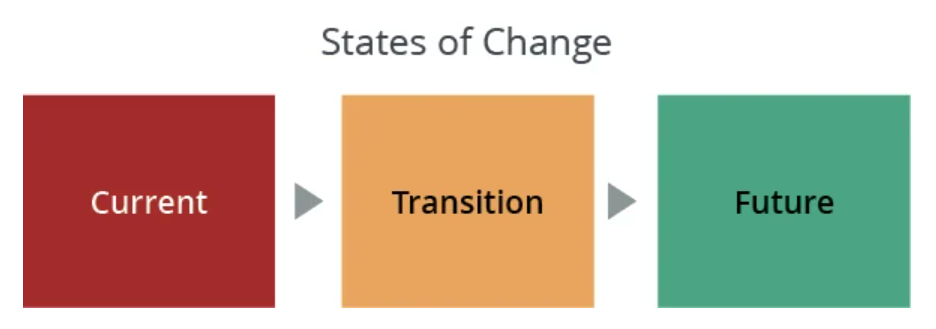
- Manage the Process of Change – Professional learning DEI, Reopening the Campus, and Presidential Search
- Develop Human, Financial, and Technical Infrastructure – ctcLink and managing changing workflow processes
Continuing this work is in preparation for the new president, who will continue the practice of setting the College on an inclusive planning process that will engage the campus community, as well as the diverse communities we serve.
UPCOMING EVENTS: Mark Your Calendars
Please check the College Calendar and the Employee Calendar for additional summer and fall events.
- Commencement – Saturday, June 19, 10:00 a.m.
- Drive-Thru Graduation Celebration – Saturday, June 19, 1:00 p.m.
- First Day of Summer Quarter (and Summer Hours Begin) – Monday, June 28
- Convocation – Friday, September 24
I hope this summer quarter affords you some rest and time to slow down, reflect, and prepare for the next year ahead. While I will not be here with you in the fall, I will certainly be cheering you and the students on from the sidelines, ever thankful for the time I’ve shared with you these past six years.
Gratefully,
Cheryl Roberts, Ed.D.
President






 Day at a Glance
Recent Comments